Good Friday

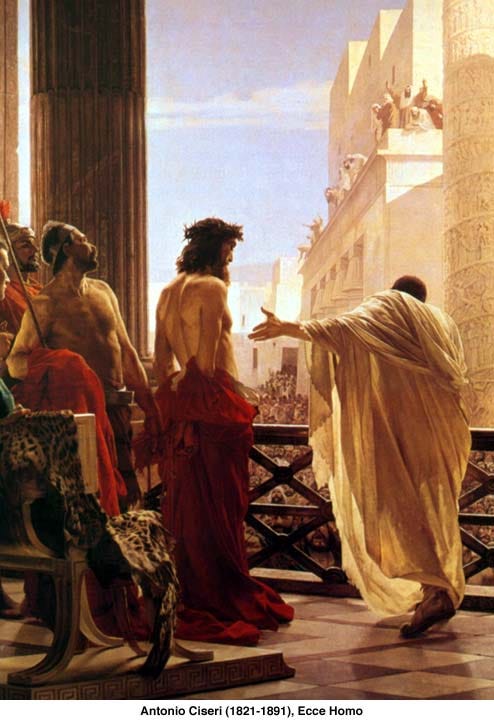
Good Friday: The Day the Sun Refused to Shine
Friday, April 3rd, 2026: Good Friday
The bells are silent. The altars are bare. The tabernacle stands open and empty, its door thrown wide like the entrance to a tomb that has already been ransacked, its lamp extinguished, its veil removed. The church that was filled last night with the fragrance of incense and the sound of the Gloria now stands in a silence so complete and so deliberate that it feels less like the absence of sound than like the presence of something too vast and too terrible for sound to contain.
Good Friday has arrived.
It is the most solemn day in the entire calendar of the Church: the day on which the Son of God was nailed to a cross outside the walls of Jerusalem and died in the sight of His mother and His beloved disciple and the soldiers who had driven the nails. It is the day on which the price of the world’s redemption was paid in full, in blood and water and the last breath of the one who had breathed life into Adam’s nostrils at the beginning of time. It is the day on which love reached its absolute limit and then went further still; and it is the day on which every soul that has ever lived is confronted with the most fundamental question that existence can pose: what will you do with this?
The Historical Reality: When and Where the Cross Was Raised
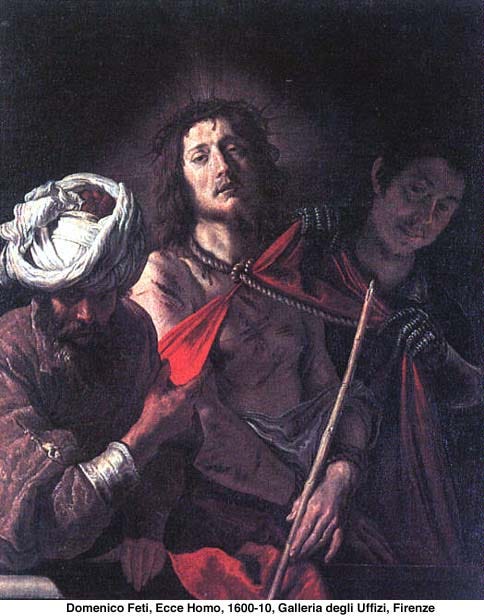
Fish Eaters’ comprehensive account of Good Friday begins with a detail that is easy to overlook in the rush of theological reflection but that is essential to the day’s meaning: the historical precision of the Crucifixion. Jesus was crucified at the third hour of the Jewish day, which corresponds to nine o’clock in the morning by our reckoning, and He died at the ninth hour, which is three o’clock in the afternoon. The date, established by careful historical and astronomical research, was the third of April in the year 33 AD; and at three forty in the afternoon of that day, a partial lunar eclipse was visible over Jerusalem, as if the heavens themselves were drawing a veil over the face of the earth in mourning for what had just occurred.
These details matter because Good Friday is not a myth or a symbol or a theological construct. It is a historical event: something that happened at a specific time, in a specific place, to a specific person, in the presence of specific witnesses. The cross was a real cross, made of real wood, driven into real ground on a real hill outside the real walls of a real city. The nails were real nails; the blood was real blood; the death was a real death. The Church has always insisted on this historical specificity because the Redemption depends on it: it is not the idea of a sacrifice that saves the world but the actual sacrifice, offered once and for all on Calvary, that is made present in every Mass until the end of time.
Fish Eaters also describes the customs and practices that have traditionally marked Good Friday in Catholic homes and communities: the wearing of black, the covering of mirrors, the extinguishing of candles, the avoidance of all amusements and unnecessary work. These are not arbitrary penances but expressions of a genuine theological instinct: the instinct that the death of Christ is not merely a liturgical event to be observed in church but a reality that must penetrate the whole of life, reshaping the way the faithful dress and eat and speak and move through the hours of this most solemn of days. The three hours from noon to three in the afternoon are particularly sacred, traditionally observed in silence and prayer, in imitation of the three hours during which Christ hung upon the cross before His death.
The Mass of the Presanctified: The Ancient Liturgy of Good Friday
The New Liturgical Movement’s detailed study of the Good Friday Mass of the Presanctified reveals the extraordinary theological architecture of the ancient Roman liturgy for this day, a liturgy that is unique in the entire calendar of the Church and that has no parallel in any other day of the year. The Mass of the Presanctified is not a Mass in the ordinary sense: no new consecration takes place, because the Church understands that on the day of the Crucifixion it is not appropriate to offer the sacrifice of the altar anew. Instead, the faithful receive Holy Communion from the Hosts that were consecrated at the Mass of Holy Thursday and reserved at the Altar of Repose throughout the night.
This ancient practice, which reaches back to the earliest centuries of the Church’s liturgical life, is one of the most theologically precise expressions of the relationship between the Eucharist and the cross. The Eucharist is the sacramental form of the sacrifice of Calvary; and on the day of Calvary itself, the Church does not offer the sacramental sacrifice anew but receives the fruits of the sacrifice that is being offered in its historical reality on the hill outside Jerusalem. The Presanctified Hosts are the Body of Christ that was given in the Upper Room the night before; and to receive them on Good Friday is to receive the Body of the one who is, at this very moment, dying on the cross.
The New Liturgical Movement’s study examines the structure of the Good Friday liturgy in detail, noting the three great acts that constitute it: the Liturgy of the Word, which includes the reading of the Passion according to Saint John and the great series of solemn prayers for the whole world; the Adoration of the Cross, in which the faithful venerate the wood of the cross in a ceremony of extraordinary beauty and theological depth; and the Mass of the Presanctified, in which the reserved Hosts are brought from the Altar of Repose to the altar and distributed to the faithful. Each of these three acts is a complete theological statement in itself; and together they constitute one of the most powerful liturgical experiences in the entire year.
The 1955 Revisions and the Theology of the Good Friday Liturgy
The New Liturgical Movement’s compendium of the 1955 Holy Week revisions as they affected Good Friday and the broader theological study of the 1955 solemn liturgical action together provide the essential context for understanding the liturgical situation of Good Friday in the modern period. The reforms of 1955 affected the Good Friday liturgy more dramatically than any other day of Holy Week, transferring the entire service from the morning to the afternoon, restructuring the solemn prayers, and modifying the ceremony of the Adoration of the Cross in ways that have been the subject of serious theological discussion ever since.
The compendium documents these changes with scholarly precision, noting that the ancient Roman tradition had always celebrated the Good Friday liturgy in the morning, in keeping with the historical reality that the Crucifixion began at the third hour of the day. The transfer to the afternoon, while motivated by pastoral considerations, altered the relationship between the liturgical celebration and the historical event it commemorates; and the restructuring of the solemn prayers, which in the ancient form were among the most theologically rich texts in the entire Roman Rite, raised questions about the theological implications of the alterations.
The broader theological study examines the 1955 Good Friday liturgy as a whole, assessing its theological coherence and its relationship to the ancient tradition. The study notes that the 1955 reforms, whatever their pastoral motivations, represented a significant departure from the liturgical tradition that had been shaped by centuries of theological reflection; and it raises the question of whether the gains in accessibility that the reforms were intended to achieve were worth the cost in theological depth and liturgical continuity. These are questions that every Catholic who loves the liturgy must grapple with honestly; and the New Liturgical Movement’s careful scholarship provides the historical and theological documentation necessary for that honest grappling.
The Passion According to Saint John: The Gospel of the King
The Catholic Apologetics text of John Chapter 18 and John Chapter 19 provide the full scriptural text of the Passion narrative as it is proclaimed in the Good Friday liturgy, allowing the faithful to follow the sacred text with the attention and reverence it deserves. Saint John’s account of the Passion is unique among the four Gospels in its theological depth and its literary artistry; and it is the account that the Church has chosen for the most solemn day of the year, because it presents the Passion not primarily as a tragedy but as a triumph: the triumph of the King who reigns from the wood of the cross.
John’s Passion begins in the garden of Gethsemane, where the soldiers and officers come to arrest Jesus with lanterns and torches and weapons. The detail of the lanterns and torches is, for John, a theological statement: the men who come to arrest the Light of the World must bring their own artificial lights because they cannot bear the light that He is. When Jesus steps forward and identifies Himself with the words “I am he,” the soldiers fall to the ground: the power of the divine name, the name that was revealed to Moses at the burning bush, is too great for them to withstand, and they fall before the one they have come to arrest.
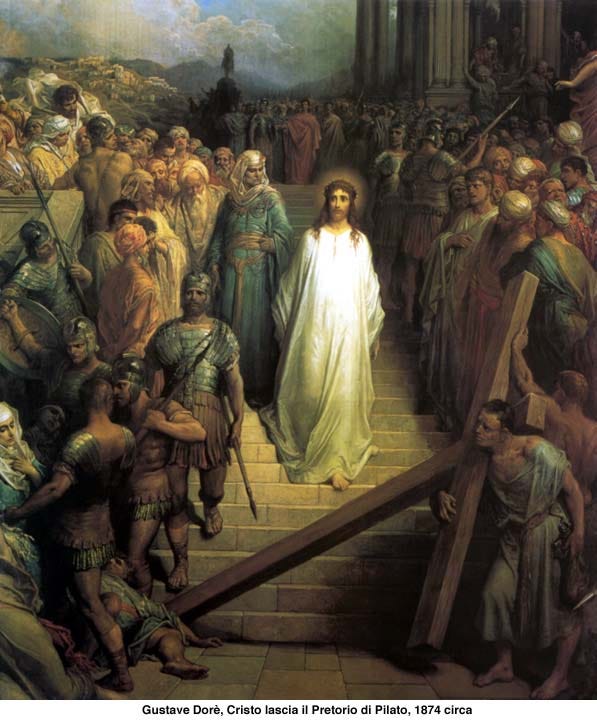
Throughout the Passion narrative, John presents Jesus as the sovereign King who is in complete control of everything that happens to Him. He is not a victim; He is the one who lays down His life freely, who could call twelve legions of angels to His defense but chooses not to, who carries His own cross to Calvary without the assistance of Simon of Cyrene that the Synoptics record. The crown of thorns that the soldiers place on His head in mockery is, in John’s theology, a real crown: the crown of the King who reigns from the cross, the King whose kingdom is not of this world but who is nonetheless the King of every world that exists.
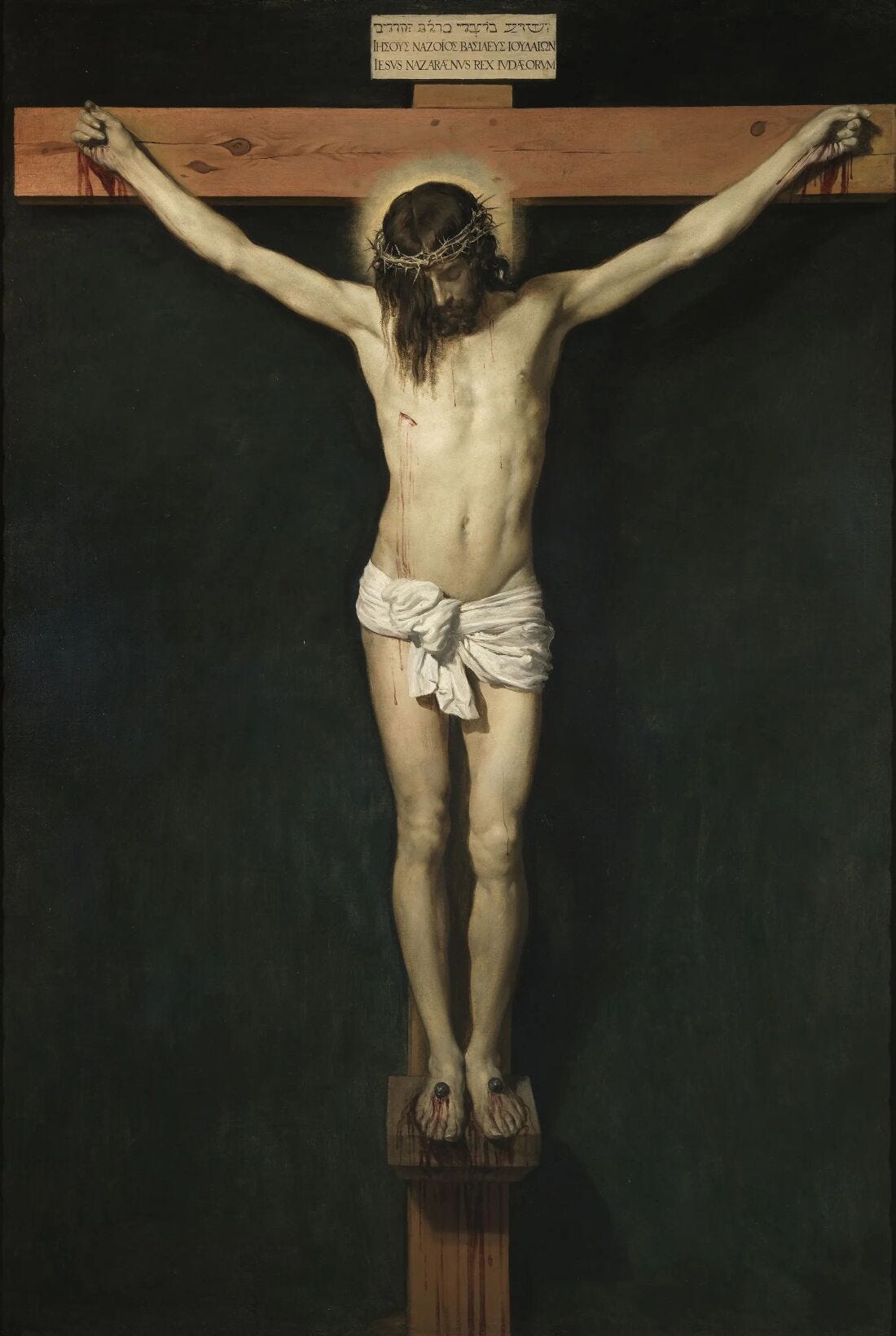
The inscription that Pilate places on the cross, “Jesus of Nazareth, King of the Jews,” written in Hebrew and Greek and Latin, the three great languages of the ancient world, is for John a proclamation of universal sovereignty: the King of the Jews is the King of the whole world, and His kingship is proclaimed in every language to every people. When the chief priests ask Pilate to change the inscription to read “He said: I am the King of the Jews,” Pilate refuses with the words that have echoed through the centuries: “What I have written, I have written.” The inscription stands; the kingship is proclaimed; and the cross becomes the throne from which the King of Kings exercises His eternal reign.
Saint John Chrysostom: The Homilies on the Passion of John
Saint John Chrysostom’s homily on the relevant passages of the Gospel of John, brings the full resources of the greatest preacher of the ancient Church to bear on the mysteries of Good Friday with the characteristic combination of theological precision and pastoral directness that made Chrysostom the most celebrated homilist of his generation. Chrysostom’s homily on the Passion of John is a masterpiece of patristic exegesis: it illuminates the text with a depth and a clarity that have made it a standard reference for all subsequent commentators.
Chrysostom meditates on the trial before Pilate with particular intensity, drawing out the theological implications of the exchange between the Roman governor and the King of Kings with the precision of a trained rhetorician and the passion of a genuine lover of souls. He notes the extraordinary irony of the scene: the one who holds the power of life and death over the whole Roman province of Judea stands before the one who holds the power of life and death over the whole of creation; and it is the lesser power that sits in judgment on the greater. Pilate’s question, “What is truth?” is for Chrysostom the question of every soul that stands before Christ and refuses to receive His answer: the question of one who has the Truth standing before him and cannot recognize it because his eyes have been blinded by the love of power and the fear of the crowd.
Chrysostom also meditates on the death of Christ, drawing from it a meditation on the meaning of the blood and water that flow from the pierced side of the Savior. He draws on the ancient patristic interpretation that understands the blood and water as figures of the two great sacraments of the Church: the blood as the Eucharist, the water as Baptism. From the pierced side of the new Adam, as from the side of the first Adam, the new Eve is born: the Church, constituted by the sacraments of Baptism and the Eucharist, flows from the wound that the soldier’s lance opens in the body of the crucified Christ. The cross is not merely the instrument of the Redemption; it is the birthplace of the Church.
Father Goffine’s Instruction: The Catechetical Tradition on Good Friday
Father Leonard Goffine’s instruction on Good Friday, provides the catechetical tradition’s approach to this day with the characteristic directness and practical wisdom of the great Norbertine priest. Goffine’s method is to present the liturgical texts of the day, explain their theological meaning, and draw from them practical lessons for the Christian life; and his instruction on Good Friday is a model of this approach.
Goffine focuses on the seven last words of Christ from the cross, understanding them as the final testament of the Savior: the words that sum up the meaning of His life and death and that provide the faithful with the theological key to the mystery of the Passion. The first word, “Father, forgive them, for they know not what they do,” is for Goffine the supreme expression of the mercy of God: the mercy that extends even to those who are in the very act of crucifying the Son of God, the mercy that asks forgiveness for its own executioners. The second word, “This day thou shalt be with me in paradise,” spoken to the good thief, is the supreme expression of the power of the cross to transform even the most desperate situation: the thief who has spent his life in crime is the first soul to enter paradise through the door that the cross has opened.
Goffine also reflects on the meaning of the Adoration of the Cross, the ceremony in which the faithful venerate the wood of the cross in the Good Friday liturgy. He notes that the veneration of the cross is not the worship of a piece of wood but the honor paid to the instrument through which the world’s redemption was accomplished: the cross is venerated because Christ was crucified on it, just as the ground of a battlefield is honored because great men died on it. The faithful who prostrate themselves before the cross on Good Friday are not engaging in superstition; they are performing an act of theological precision, acknowledging in their bodies what they believe in their minds: that this wood is the most sacred object in the history of the world.
Dom Gueranger: The Theology of the Redemption
Dom Prosper Gueranger’s meditation on Good Friday brings to this day the full resources of his patristic learning and his deep liturgical sensibility, meditating on the mysteries of Calvary with a theological depth and a devotional warmth that are characteristic of his best work. Gueranger understands Good Friday not merely as a historical commemoration but as a living participation in the mystery of the Redemption: the liturgy of Good Friday does not merely recall what happened on Calvary but makes the faithful present to it, drawing them into the mystery of the cross in a way that is transformative rather than merely informative.
Gueranger meditates on the meaning of the title “Good Friday” itself, noting that the day is called “good” not despite the horror of what occurred on it but because of the goodness that the horror accomplished. The death of Christ is the supreme act of divine goodness: the goodness that takes upon itself the consequences of human sin, that accepts the punishment that justice demands in order that mercy might be extended to those who deserve punishment. The cross is good because it is the instrument of the world’s redemption; and Good Friday is good because it is the day on which the price of that redemption was paid in full.
Gueranger also meditates on the great solemn prayers of the Good Friday liturgy, the ancient series of intercessions for the whole world that constitutes one of the most comprehensive acts of prayer in the entire Roman Rite. These prayers, which intercede for the Church, for the Pope, for the clergy, for the faithful, for catechumens, for those in various forms of need, for the unity of Christians, for the Jewish people, and for all who do not yet know Christ, are for Gueranger a demonstration of the universal scope of the Redemption: the cross was raised for all, and the Church that stands at the foot of the cross prays for all, asking that the fruits of the Passion might reach every soul that has ever lived.
The Three Hours Agony: The Devotion of the Sacred Hours
The devotion for the Three Hours Agony on Good Friday afternoon provides the faithful with the traditional form of the Tre Ore devotion, the three-hour service of prayer and meditation that has been observed in Catholic communities throughout the world on Good Friday afternoon since the seventeenth century. The devotion, which was first organized by the Jesuit Father Francis Borgia Stretel in Lima, Peru, in the late seventeenth century, is structured around the seven last words of Christ from the cross, with a meditation on each word followed by prayers and hymns.
The Three Hours Agony is one of the most powerful devotional practices in the entire Catholic tradition: it asks the faithful to remain in prayer for the same three hours during which Christ hung upon the cross before His death, from noon until three in the afternoon, entering into the mystery of His suffering with a depth of attention and a quality of presence that ordinary devotional practices rarely achieve. The devotion is not merely a series of prayers to be recited; it is an immersion in the mystery of the cross, a sustained act of contemplation that is designed to reshape the soul’s understanding of suffering, of love, and of the meaning of human existence.
The text presented by Catholic Saints includes meditations on each of the seven last words that are drawn from the great tradition of Catholic spiritual writing, combining theological precision with devotional warmth in a way that is accessible to the ordinary faithful while remaining theologically substantial. The meditation on the first word, “Father, forgive them,” reflects on the meaning of the mercy of God as it is revealed in the act of crucifixion; the meditation on the last word, “Father, into thy hands I commend my spirit,” reflects on the meaning of the death of Christ as the supreme act of filial trust in the Father. Together, the seven meditations constitute a complete theology of the cross, presented in a form that the faithful can enter into through prayer and contemplation.
Saint Vincent Ferrer: The Great Dominican Preacher on Good Friday
The sermon on Good Friday by Saint Vincent Ferrer, the great Dominican preacher of the late fourteenth and early fifteenth centuries whose missions converted tens of thousands of souls throughout Europe, provides one of the most powerful and most theologically concentrated homilies on the Passion in the entire tradition of Catholic preaching. Saint Vincent, who was renowned throughout Europe for the power of his preaching and the miracles that accompanied his missions, brings to the mystery of Good Friday the full force of his Dominican theological training and his extraordinary pastoral gifts.
Saint Vincent’s sermon on Good Friday is structured around the image of the cross as a book: the cross is the book in which God has written the full text of His love for the human soul, and the wounds of Christ are the letters in which that text is inscribed. This image, which draws on the rich tradition of medieval affective theology, is developed by Saint Vincent with a precision and a power that are characteristic of his best preaching: he moves from the wounds of the hands, which speak of the generosity of God’s love, to the wounds of the feet, which speak of the perseverance of that love, to the wound of the side, which speaks of the intimacy of that love, to the wounds of the head from the crown of thorns, which speak of the sovereignty of that love.
Saint Vincent also meditates on the meaning of the darkness that covered the land from the sixth to the ninth hour, understanding it as a cosmic sign of mourning but also as a figure of the spiritual darkness that covers the soul that refuses to receive the light of the cross. The darkness of Calvary is both a historical event and a permanent spiritual reality: it is the darkness of the world without Christ, the darkness of the soul that has turned away from the love that is offered on the cross. Saint Vincent’s sermon is a call to emerge from that darkness, to turn toward the cross, and to receive the light that flows from the wounds of the crucified Savior.
Archbishop Goodier: The Crown of Sorrow
Archbishop Alban Goodier’s The Crown of Sorrow, the great English Jesuit archbishop’s meditation on the Passion of Christ, provides one of the most sustained and most theologically rich contemplations of the mysteries of Good Friday in the English Catholic tradition. Archbishop Goodier, who served as Archbishop of Bombay in the early twentieth century and who was one of the most distinguished spiritual writers of his generation, brings to the Passion a combination of scholarly depth and devotional warmth that makes his work accessible to a wide range of readers while remaining theologically substantial.
The Crown of Sorrow takes its title from the crown of thorns, understanding it as the symbol of the particular kind of suffering that Christ endured on Good Friday: not merely physical suffering, though that was real and terrible, but the suffering of rejection, of mockery, of the deliberate infliction of humiliation by those who should have recognized and honored their King. The crown of thorns is the symbol of the suffering that comes from being misunderstood, from being treated as less than one is, from having one’s dignity deliberately violated; and Archbishop Goodier meditates on this suffering with a depth of empathy and a precision of theological analysis that are characteristic of his best work.
Archbishop Goodier also meditates on the meaning of the cross as the throne of the King, drawing on the Johannine theology of the Passion to present the crucifixion not as a defeat but as a coronation: the moment at which the King of Kings assumes His throne and begins His eternal reign. The cross is the throne of love; and the reign that begins on Good Friday is the reign of the love that holds nothing back, the love that gives everything including life itself. This is the reign that the Church celebrates on Good Friday: not the reign of power or of force but the reign of love, the reign that conquers not by destroying its enemies but by dying for them.
Our Lady on Mount Calvary: The Compassion of the Mother
The One Peter Five meditation on Mary on Mount Calvary before the death of her Son provides one of the most moving and theologically rich reflections on the role of the Blessed Virgin in the mystery of Good Friday. The presence of Mary at the foot of the cross is not a peripheral detail of the Passion narrative; it is a central theological reality, the fulfillment of the prophecy of Simeon who told her at the Presentation that a sword would pierce her own soul.
The One Peter Five meditation draws on the tradition of the Church’s reflection on the Compassio of Mary, her co-suffering with her Son on Calvary, to present the Blessed Virgin as the supreme model of the soul’s response to the cross. Mary does not flee from the cross; she stands at its foot, in the full sight of her Son’s suffering, united with Him in a love that is stronger than the horror of what she is witnessing. Her presence at the cross is an act of supreme courage and supreme love: the courage of the mother who will not abandon her Son even in the hour of His most terrible suffering, and the love of the one who has said her fiat to the will of God and who now lives out the full consequences of that fiat in the darkness of Calvary.
The meditation also reflects on the theological significance of Christ’s words from the cross to Mary and to the beloved disciple: “Woman, behold thy son; behold thy mother.” These words, which constitute one of the seven last words, are understood by the tradition of the Church as the institution of Mary’s universal motherhood: in the person of the beloved disciple, Christ gives His mother to the whole Church, and gives the whole Church to His mother. The woman who stood at the foot of the cross on Good Friday is the mother of every soul that has ever been redeemed by the blood that was shed on that cross; and the devotion to Our Lady of Sorrows that the Church practices on Good Friday is the devotion of children to the mother who stood with them at the moment of their redemption.
Bishop Challoner: The English Catholic Tradition on Good Friday
Bishop Richard Challoner’s meditation for Good Friday brings the devotional wisdom of the English Catholic recusant tradition to bear on the mysteries of this day with the characteristic warmth and precision that made Challoner the most beloved spiritual writer of his generation. Challoner, who sustained the faith of English Catholics through the long years of persecution and whose works were read in secret by families who risked everything to maintain their faith, meditates on Good Friday as the day of the supreme gift: the day on which God gave everything He had for the love of souls that had given Him nothing but sin.
Challoner’s meditation focuses on the meaning of the Crucifixion as the fulfillment of the whole of sacred history: every sacrifice of the Old Testament, from the sacrifice of Abel to the sacrifice of the Temple, was a figure and a prophecy of the sacrifice of Calvary; and on Good Friday, all the figures are fulfilled and all the prophecies are accomplished. The lamb of the Passover, the scapegoat of the Day of Atonement, the daily sacrifice of the Temple: all of these are shadows of the one true sacrifice that is offered on the cross, the sacrifice that gives meaning to all the sacrifices that preceded it and that makes all subsequent sacrifices unnecessary except as participations in its own infinite merit.
Challoner also reflects on the practical implications of the Crucifixion for the Christian life, asking the reader to examine his own life in the light of the cross. The cross is not merely an object of theological contemplation; it is a demand: the demand that the soul that has been redeemed by the blood of Christ should live in a manner worthy of that redemption, should bear its own crosses with patience and even with joy, should see in every suffering a participation in the sufferings of Christ and therefore a means of union with Him. The cross of Christ does not abolish the crosses of His disciples; it transforms them, giving them a meaning and a dignity that they could not have on their own.
Saint Alphonsus Liguori: The Devotional Depth of Good Friday
The Religious Bookshelf’s meditations for Good Friday, drawn from the writings of Saint Alphonsus Liguori, provide the affective and devotional dimension of the day’s mysteries with the characteristic intensity and tenderness of the great Neapolitan Doctor of the Church. Saint Alphonsus approaches the Crucifixion not primarily as a theologian or a liturgist but as a lover: as one who has been seized by the love of Christ crucified and who wishes to draw every soul into the same experience of that love.
Saint Alphonsus meditates on the death of Christ with a depth of feeling that is characteristic of his entire spiritual teaching: he does not allow the faithful to remain at a safe distance from the mystery of the cross but draws them into it, asking them to stand with Mary and John at the foot of the cross and to feel the weight of what is happening there. The death of Christ is not an abstraction; it is a concrete, physical, historical event: the stopping of a heart, the cessation of breathing, the moment at which the soul of the Son of God departed from His body and the body that had been the temple of the divinity hung lifeless on the wood of the cross.
Alphonsus also meditates on the meaning of the death of Christ for the individual soul, asking each reader to consider what it means that Christ died specifically for him or for her: not for humanity in the abstract but for this particular soul, with its particular sins and its particular weaknesses and its particular history of infidelity. The love of God is not a general benevolence directed toward the human race as a whole; it is a particular love, directed toward each soul individually, a love that would have been willing to undergo the whole of the Passion for the sake of a single soul. This is the love that is revealed on Good Friday; and it is the love that Saint Alphonsus wishes every soul to receive and to return.
The Adoration of the Cross: The Church’s Supreme Act of Veneration
The Adoration of the Cross, the ceremony in which the faithful venerate the wood of the cross in the Good Friday liturgy, is one of the most ancient and most theologically rich ritual acts in the entire Roman Rite. The ceremony begins with the gradual unveiling of the cross, accompanied by the threefold chant of “Behold the wood of the cross, on which hung the salvation of the world,” to which the faithful respond: “Come, let us adore.” The cross is then placed before the altar, and the faithful come forward one by one to venerate it, prostrating themselves before it or kissing it in an act of reverence that is simultaneously an act of faith, of gratitude, and of love.
The chants that accompany the Adoration of the Cross are among the most beautiful and most theologically concentrated in the entire Roman Rite. The Improperia, or Reproaches, in which Christ addresses His people from the cross and recalls the benefits He has bestowed on them and the ingratitude with which they have responded, are a masterpiece of liturgical poetry: they draw on the imagery of the Exodus and the history of Israel to present the Passion as the culmination of a long history of divine love and human rejection. “My people, what have I done to thee? Or in what have I afflicted thee? Answer me.” These words, sung before the cross on Good Friday, are addressed not merely to the people of Israel but to every soul that has received the grace of God and responded with indifference or sin.
The Crux Fidelis, the hymn to the faithful cross that is sung during the Adoration, is one of the great hymns of the Roman Rite: it celebrates the cross as the most noble of all trees, the tree that bore the most precious of all fruits, the tree whose wood, whose nails, and whose weight the world could not contain. The hymn is a theological statement in verse: it presents the cross not as an instrument of torture but as the throne of the King, the altar of the High Priest, the tree of life that replaces the tree of the knowledge of good and evil in the garden of Eden.
What Good Friday Asks of Us
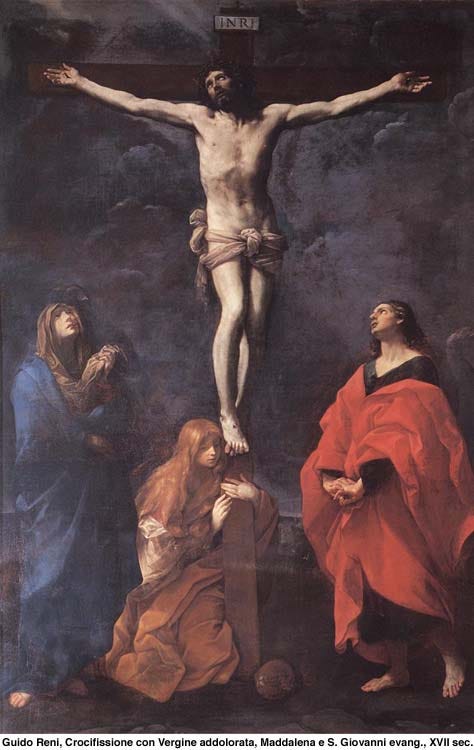
Good Friday does not ask us to feel a certain emotion or to perform a certain devotion. It asks us to stand at the foot of the cross and to look: to look at the one who hangs there, to recognize who He is and what He is doing, and to allow that recognition to reshape everything we think and feel and do. It asks us to stand with Mary, who did not flee from the horror of what she was witnessing but remained at the foot of the cross in the full force of her love and her grief. It asks us to stand with John, the beloved disciple, who alone among the Twelve had the courage to remain when the others had fled.
The cross is not comfortable. It was not designed to be comfortable. It was designed to be the instrument of the most terrible form of execution that the ancient world had devised; and the one who hangs on it is the Son of God, who chose this instrument freely, who could have avoided it at any moment, who endured it to the end out of a love that no human mind can fully comprehend. To stand at the foot of this cross and to look at this love is to be confronted with the most fundamental question that existence can pose: what will you do with this?
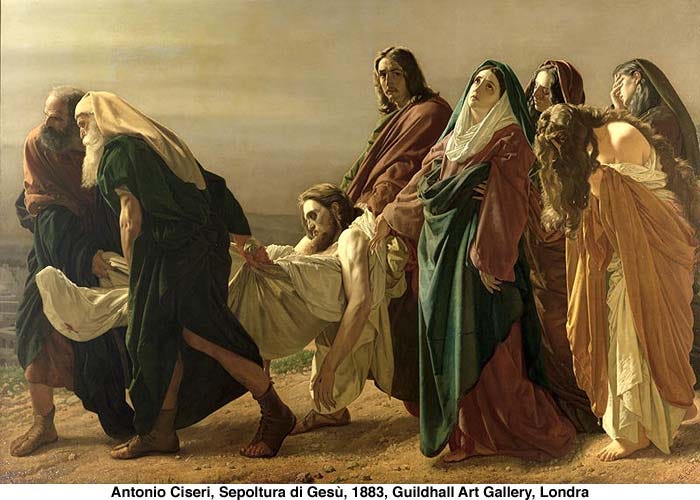
Holy Saturday is tomorrow. The tomb is one day away. The resurrection is two days away. But before we can celebrate the resurrection, we must stand at the cross; and before we can stand at the cross, we must be willing to look at what is happening there, to receive the full weight of the love that is being poured out, and to allow it to do in our souls what it accomplished in the world: the destruction of everything that separates us from God, and the opening of the way to the eternal life that the Son of God died to give us.
Behold the wood of the cross, on which hung the salvation of the world. Come, let us adore.
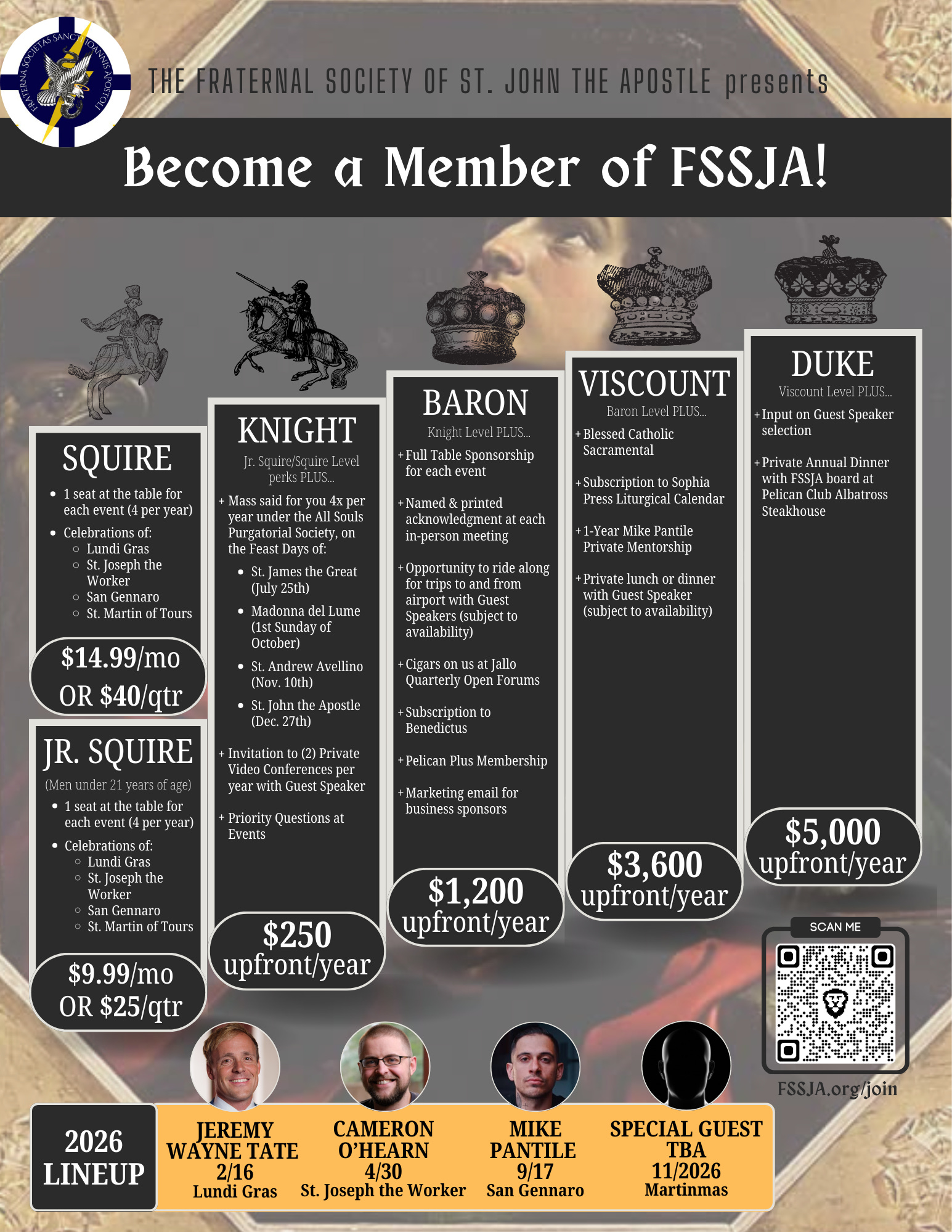
We invite you to renew your membership or become a member today by visiting fssja.org/join.