Holy Monday

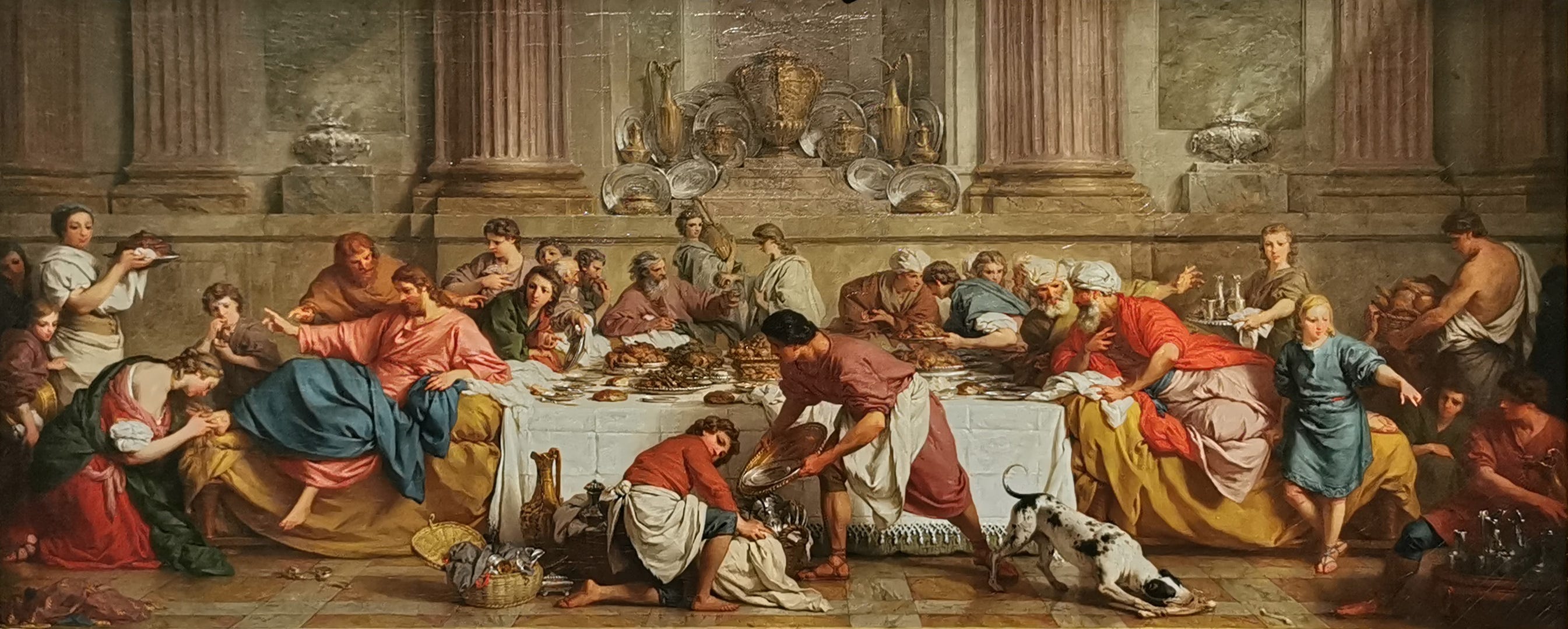
The Shadow Deepens: Holy Monday and the Mystery of the Anointing at Bethany
Monday, March 30th, 2026: Monday in Holy Week
The palms have been carried home. The procession is over. The shout of Hosanna has faded into the silence of the streets, and the King who entered Jerusalem in triumph has returned to Bethany for the night, to the house of His friends: Martha, Mary, and the man He raised from the dead. Holy Week has begun, and with it begins the most concentrated and most theologically dense sequence of days in the entire liturgical year. Each day of this week carries its own weight, its own mystery, its own particular grace; and the soul that wishes to enter fully into the Paschal mystery must be willing to follow Christ not only through the triumph of Palm Sunday but through the quiet, deepening shadow of these days that lead to the cross.
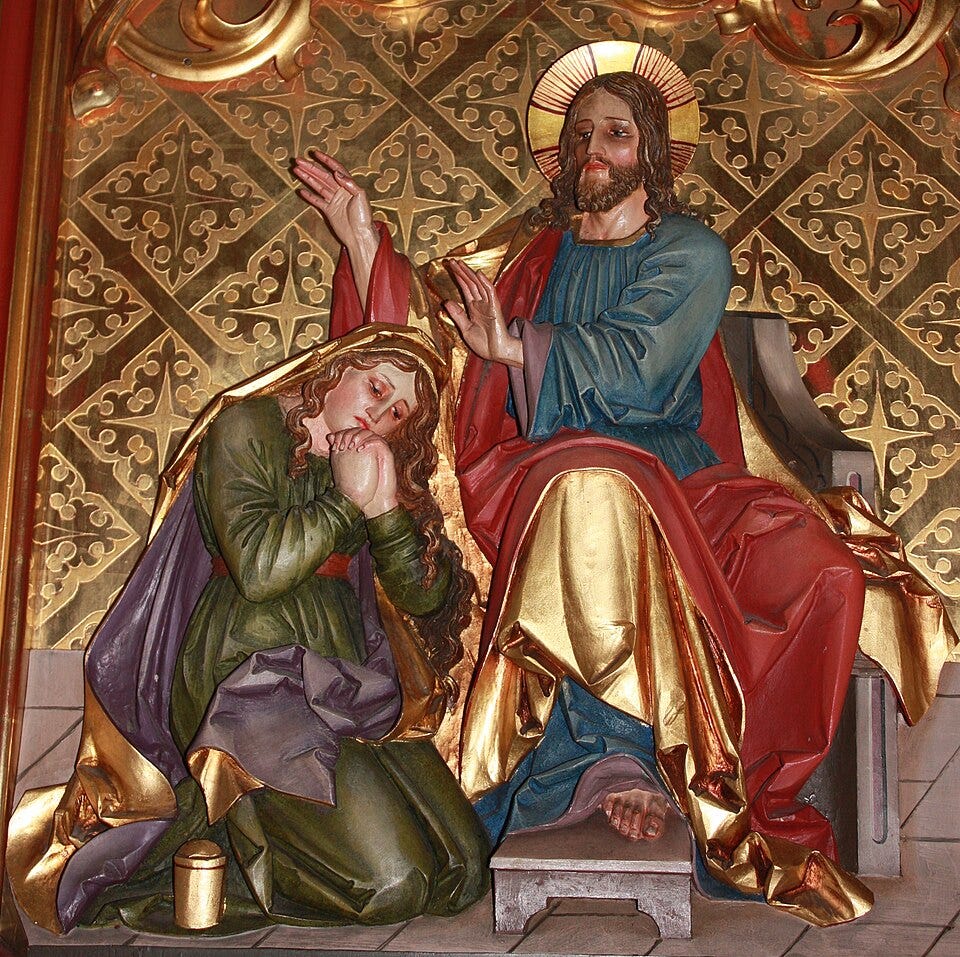
Today is Holy Monday, the second day of Holy Week, a day that the Church’s liturgy fills with the figure of a woman kneeling at the feet of Christ, pouring out upon them an ointment of great price, and with the figure of a man standing nearby, calculating its cost and finding it excessive. Between these two figures, between Mary of Bethany and Judas Iscariot, the whole drama of the Passion is already contained in miniature.
The Mass of Holy Monday: Scripture, Prophecy, and the Suffering Servant
The Holy Liturgy reveals the extraordinary theological coherence of the propers assigned to this day in the Roman Rite. The Mass of Holy Monday is constructed with a precision that reflects centuries of liturgical development, each element chosen to illuminate a particular facet of the Passion mystery that is now unfolding day by day.
The Introit, Gradual, and Communion are all drawn from Psalm 34, the great psalm of the persecuted just man who cries to God for deliverance from his enemies. The repetition of this psalm across three of the Mass propers is not accidental; it creates a kind of sustained meditation on the theme of the innocent sufferer, the one who is surrounded by those who seek his life and who turns to God alone for refuge. The Church places these words on the lips of Christ Himself, understanding the psalms of persecution as prophetic utterances of the Messiah who will be handed over to His enemies and put to death.
The Epistle is taken from the fifty-third chapter of Isaiah, the fourth of the great Servant Songs: “The Lord God hath opened my ear, and I do not resist: I have not gone back. I have given my body to the strikers, and my cheeks to them that plucked them: I have not turned away my face from them that rebuked me, and spit upon me.” This text, one of the most remarkable prophetic passages in the entire Old Testament, presents the Suffering Servant as one who accepts his suffering not passively but actively, who offers himself freely to those who would destroy him. The Church reads this text on Holy Monday as a direct prophecy of Christ’s Passion, understanding the Servant of Isaiah as a figure of the Son of God who will give His body to the strikers and His cheeks to those who pluck them.
The Gospel is taken from the twelfth chapter of Saint John, and it narrates the anointing at Bethany, the event that stands at the threshold of the Passion narrative and gives Holy Monday its distinctive character.
A Liturgical Oddity: The Unique Character of Holy Monday in 2026
The New Liturgical Movement’s reflection on a liturgical oddity of Holy Monday draws attention to a fascinating dimension of the Roman liturgical tradition that is easily overlooked: the relationship between the fixed and moveable feasts of the calendar and the way in which the propers of Holy Week interact with the broader structure of the liturgical year. The traditional Roman Rite is a system of extraordinary complexity and coherence, in which every element of every Mass has been chosen with theological care; and the study of the liturgical oddities that arise from the interaction of different elements of the calendar reveals the depth and the richness of this tradition in ways that a more superficial engagement with the liturgy cannot.
The Roman Rite’s assignment of specific scriptural texts to specific days of Holy Week reflects a theological vision of the week as a unified whole, a single extended meditation on the mystery of the Passion in which each day contributes its own particular perspective. Holy Monday’s focus on the anointing at Bethany, on the Suffering Servant of Isaiah, and on the psalms of persecution creates a particular atmosphere: an atmosphere of intimacy and impending loss, of love poured out extravagantly in the face of approaching death.
The Anointing at Bethany: The Gospel of Holy Monday
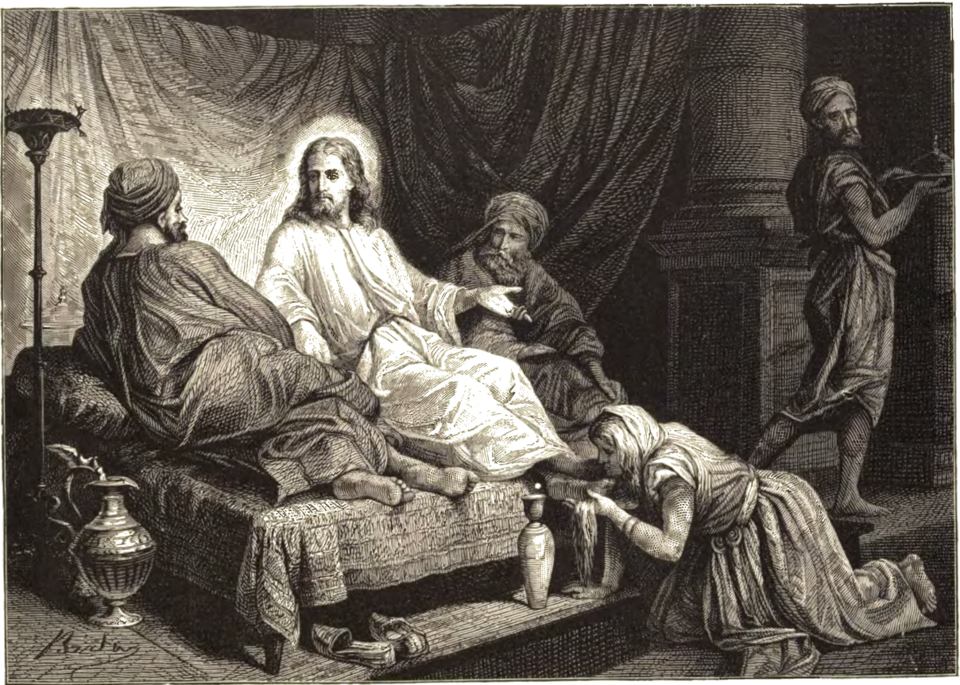
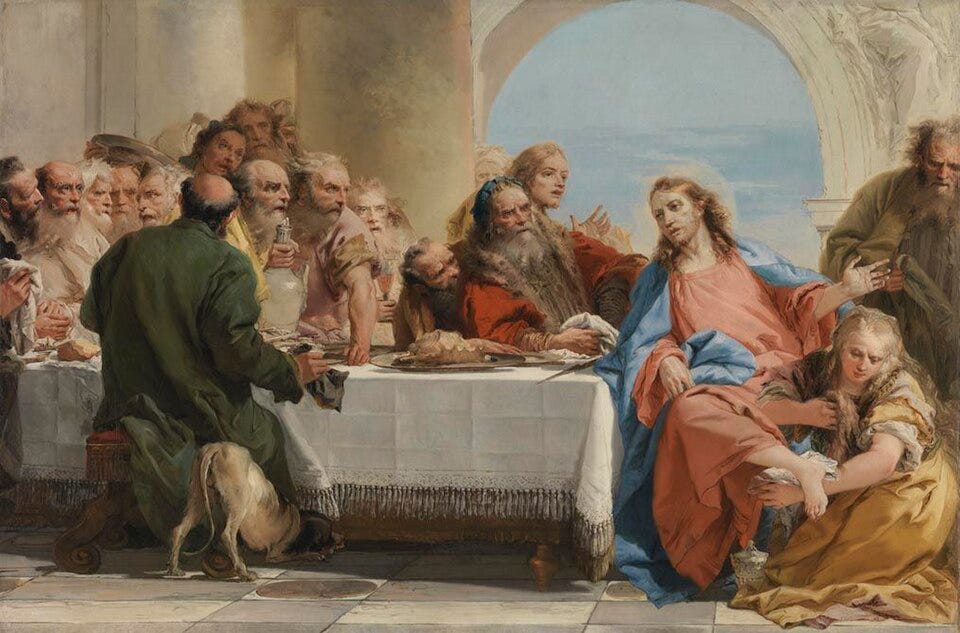
The Gospel of Holy Monday, taken from the twelfth chapter of Saint John, narrates one of the most beautiful and most theologically rich scenes in the entire Gospel narrative. Six days before the Passover, Jesus is at Bethany, in the house of Lazarus whom He had raised from the dead. Martha serves; Lazarus reclines at table with Him; and Mary takes a pound of ointment of pure nard, very costly, and anoints the feet of Jesus and wipes them with her hair. The house is filled with the fragrance of the ointment.
It is Judas Iscariot who objects: “Why was not this ointment sold for three hundred denarii, and given to the poor?” Saint John adds, with characteristic precision, that Judas said this not because he cared for the poor but because he was a thief, and having the purse, he used to take what was put into it. And Christ answers: “Let her alone, that she may keep it for the day of my burial. For the poor you have always with you, but me you have not always.”
St John Chrysostom, preaching to the faithful of Antioch in the late fourth century, draws out the contrast between Mary’s extravagant love and Judas’s calculating avarice with a precision that cuts to the heart of the Passion mystery. The anointing at Bethany is not merely a touching episode of personal devotion; it is a prophetic act, a preparation for burial, a declaration that the one whose feet are being anointed is about to die. Mary understands, at some level that transcends rational calculation, what is about to happen; and her response is not economy but extravagance, not prudent management but the total gift of herself and her most precious possession.
Chrysostom also reflects on the figure of Caiaphas, whose prophecy that one man should die for the people is recorded in the preceding chapter of John’s Gospel, the chapter that immediately precedes the anointing at Bethany. Caiaphas speaks more truly than he knows: his words, intended as a piece of political calculation, are in fact a divine oracle, a statement of the deepest truth of the Redemption. The high priest who plots the death of Christ becomes, unwittingly, a prophet of the very mystery he seeks to destroy.
Dom Gueranger: The Theological Spirit of Holy Monday
Gueranger, whose Liturgical Year remains the most comprehensive and most theologically rich commentary on the Roman liturgy ever written, meditates on Holy Monday as a day of transition: a day on which the Church moves from the public triumph of Palm Sunday to the intimate, interior drama of the Passion.
Gueranger reflects at length on the figure of Mary of Bethany, understanding her anointing of Christ’s feet as an act of prophetic love that anticipates the anointing of His body for burial. The fragrance of the nard that fills the house at Bethany is, for Gueranger, a figure of the grace of the Passion that will fill the whole world: the sweet odor of Christ’s sacrifice, which Saint Paul calls “the good odor of Christ unto God, in them that are saved, and in them that perish.” The extravagance of Mary’s gift, the three hundred denarii worth of ointment poured out without reserve, is a figure of the extravagance of the Redemption itself: the infinite love of God poured out without measure for the salvation of a world that did not deserve it.
Gueranger also meditates on the contrast between Mary and Judas as a contrast between two fundamental orientations of the human soul: the orientation of love, which gives without counting the cost; and the orientation of avarice, which calculates everything and loves nothing. Judas is not merely a historical villain; he is a figure of the soul that has allowed the love of money and of self to crowd out the love of God, the soul that stands in the presence of infinite love and sees only its market value. The tragedy of Judas is not that he was uniquely wicked but that he was capable of the same love as Mary and chose, at every decisive moment, to turn away from it.
Father Goffine’s Instruction on Holy Monday: The Catechetical Tradition
Father Leonard Goffine’s instruction on Holy Monday provides the catechetical tradition’s approach to this day, drawing on the great German Norbertine priest whose Church’s Year was one of the most widely used works of popular religious instruction in the Catholic world for more than two centuries. Goffine’s method is characteristically direct and practical: he presents the liturgical texts of the day, explains their meaning, and draws from them practical lessons for the Christian life.
Goffine’s instruction on Holy Monday focuses on the Gospel of the anointing at Bethany and draws from it a series of practical reflections on the nature of true devotion. True devotion, Goffine argues, is not a matter of external observance or calculated piety; it is the total gift of the self to God, the pouring out of one’s most precious possession at the feet of Christ without reserve and without calculation. Mary of Bethany is the model of this total devotion: she does not ask whether her gift is proportionate, whether it is prudent, whether it will be well received; she simply gives, because love does not calculate.
Goffine also reflects on the meaning of Christ’s defense of Mary against the criticism of Judas. When Christ says “Let her alone,” He is not merely defending a particular act of devotion; He is declaring a principle: that the love of God has a priority over every other consideration, including the care of the poor. This is not a dismissal of the duty of charity toward the poor; it is a statement of the proper order of love, in which the love of God comes first and the love of neighbor flows from it. The soul that loves God truly will love the poor truly; the soul that uses the poor as an excuse to avoid the total gift of itself to God has understood neither love nor poverty.
Bishop Challoner: The English Catholic Tradition on Holy Monday
Bishop Richard Challoner’s meditation for Monday in Holy Week brings the devotional tradition of the English Catholic Church to bear on the mysteries of this day with the characteristic warmth and precision that made Challoner the most beloved spiritual writer of the English Catholic recusant tradition. Challoner, who sustained the faith of English Catholics through the long years of persecution and whose Garden of the Soul shaped the devotional life of generations, meditates on Holy Monday as a day of preparation: a day on which the soul is called to enter more deeply into the mystery of the Passion by contemplating the love that drives it.
Challoner’s meditation focuses on the meaning of Christ’s willingness to go to His death, understanding it not as a passive submission to external forces but as an active and free choice of love. Christ does not go to Jerusalem because He has no choice; He goes because He has chosen to give His life for the salvation of the world, and every step He takes toward the cross is a step taken in full freedom and full love. This understanding of the Passion as a free act of love is essential to the Christian understanding of the Redemption: it is not the suffering of Christ that saves us but the love that freely accepts the suffering for our sake.
Challoner also reflects on the practical implications of this mystery for the Christian life. If Christ has loved us to the point of giving His life for us, what response does this love demand from us? Challoner’s answer is characteristically direct: it demands everything. The soul that has understood the love of Christ cannot respond with a partial gift, a calculated devotion, a piety that reserves something for itself. It must respond as Mary of Bethany responded: with the total gift of itself, poured out without reserve at the feet of the One who has given everything for it.
Saint Alphonsus Liguori: The Devotional Depth of Holy Monday
The Religious Bookshelf’s meditations for Monday in Holy Week, drawn from the writings of Saint Alphonsus Liguori, provide the devotional and affective dimension of the day’s mystery with the characteristic intensity and tenderness of the great Neapolitan Doctor of the Church. Saint Alphonsus, whose Visits to the Blessed Sacrament and The Glories of Mary shaped the devotional life of millions of Catholics in the modern period, approaches the mysteries of Holy Week not primarily as a theologian or a liturgist but as a lover: as one who has been seized by the love of Christ and who wishes to draw others into the same experience.
Saint Alphonsus meditates on the Passion as the supreme revelation of the love of God, the moment in which the infinite love that has always existed in the heart of the Trinity becomes visible and tangible in the suffering flesh of the Son of God. The wounds of Christ are, for Alphonsus, not merely the marks of His suffering but the letters in which the love of God is written: each wound a word, each drop of blood a declaration of the love that has driven God to become man and to die for the salvation of His creatures.
The meditations of Saint Alphonsus for Holy Monday are particularly focused on the theme of ingratitude: the ingratitude of those who, having received so great a love, continue to live as though it had never been given. Alphonsus does not moralize in the abstract; he personalizes the challenge, asking the reader to consider his own life, his own habits, his own daily choices, and to ask whether they reflect the love of one who has understood what Christ has done for him. The anointing at Bethany is, for Alphonsus, a model of the response that the love of Christ demands: not a calculated, proportionate response but a total, extravagant, unreserved gift of the self.
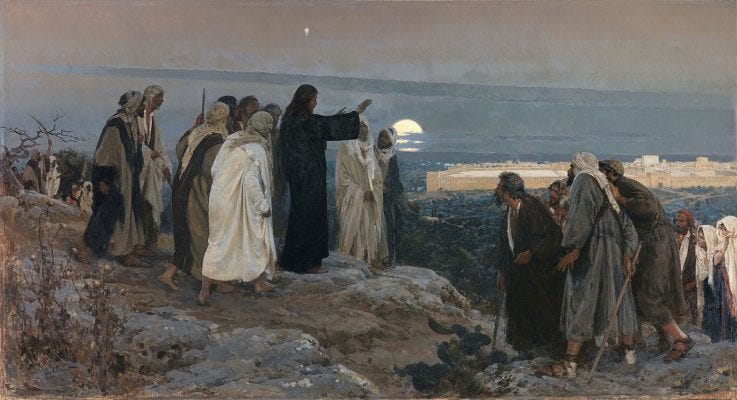
The Atmosphere of Holy Monday: Intimacy Before the Storm
There is a quality of intimacy about Holy Monday that distinguishes it from the other days of Holy Week. The great public ceremonies of Palm Sunday are behind us; the solemn darkness of the Triduum is still ahead. Today we are at Bethany, in a house, at a table, with friends. The fragrance of the nard fills the air. Christ is present, and those who love Him are gathered around Him, and for a moment the approaching storm seems very far away.
But it is not far away. Judas is already calculating. The chief priests are already plotting. The hour is coming, and the soul that wishes to be found faithful when it comes must use these quiet days of Holy Monday and Holy Tuesday to deepen its love, to strengthen its resolve, to pour out its own ointment of devotion at the feet of the One who is about to give His life.
The liturgy of Holy Monday invites us to make the choice that Mary of Bethany made: to choose love over calculation, extravagance over prudence, the total gift of the self over the careful management of our spiritual resources. It invites us to fill the house with the fragrance of our devotion, knowing that the fragrance of love is the only thing that will sustain us through the darkness that is coming.
Holy Tuesday is tomorrow. The cross is four days away. Let us kneel with Mary at the feet of Christ and pour out everything we have.

We invite you to renew your membership or become a member today by visiting fssja.org/join.