
Shrove Tuesday
Plus the Feasts of the Holy Face of Jesus and Holy Shroud

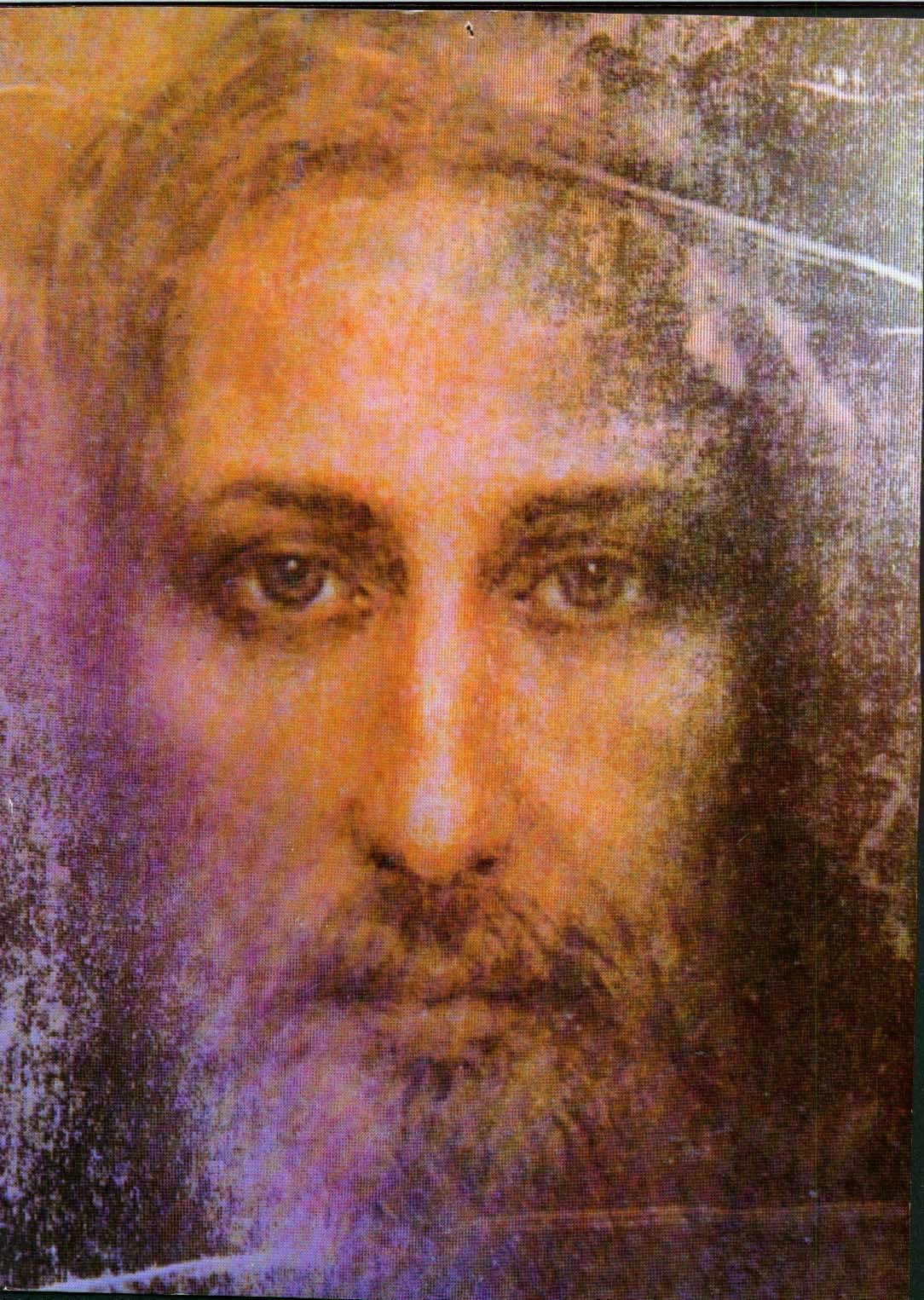
Shrove Tuesday: The Feast of the Holy Face and the Holy Winding Sheet
Tuesday, February 17, 2026 — The Final Day Before Lent
Today is Shrove Tuesday—the last day before the ashes fall, the final hours before we enter the desert of Lent. While the secular world knows this day only as “Mardi Gras” (Fat Tuesday), a occasion for excess and revelry, the Church in her wisdom has consecrated this day with two extraordinary feasts that call us to contemplation, reparation, and reverence before the sacred face and body of our crucified Lord.
Tuesday of Quinquagesima Week marks the culmination of Shrovetide and stands as the threshold between the pre-Lenten preparation we have been making since Septuagesima Sunday and the penitential rigors that begin tomorrow. But this day is far more than a transitional moment—it is a day consecrated to profound mysteries that speak to the very heart of our Redemption.
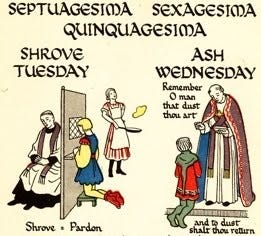
The Dual Feasts of Shrove Tuesday
On this singular day, the Church celebrates two intimately connected mysteries:
The Feast of the Holy Winding Sheet of Christ (the Shroud of Turin), officially established by Pope Pius XII in 1958
The Feast of the Holy Face of Jesus, approved for reparation and contemplation on Shrove Tuesday
Both feasts direct our gaze to the Passion—to Christ’s suffering, death, and burial. Both emerged from profound mystical revelations and popular devotion. And both stand as acts of reparation for the excesses and sins committed during the carnival season.
The timing is providential. As the world indulges in its final acts of debauchery before Lent, the Church places before us the bruised, bloodied, and crucified face of Christ—a stark reminder of what our sins cost, and a call to sincere conversion.
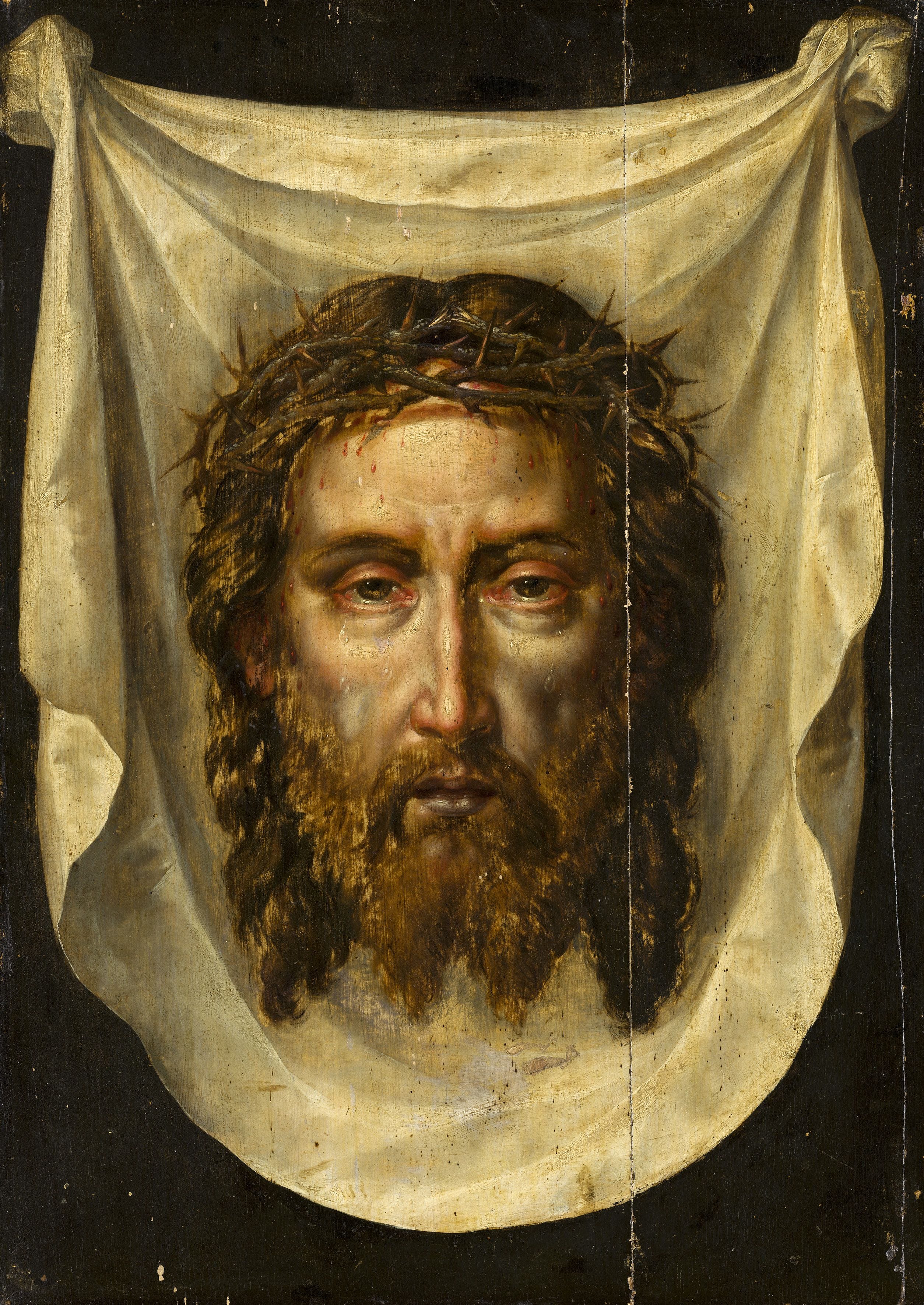
The Feast of the Holy Winding Sheet of Christ
History and Establishment
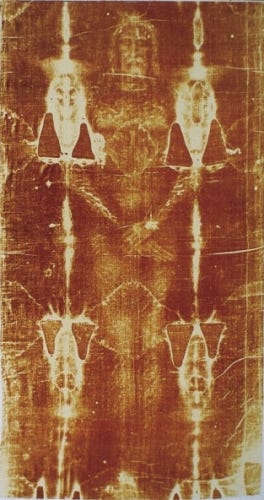
The Feast of the Holy Winding Sheet of Christ honors the Shroud of Turin, believed by millions to be the actual burial cloth of Jesus Christ. The feast originated around 1495 in Chambéry, France, to honor the sudario (burial cloth) of Christ, which had been brought there in 1432 from Lirey. Since 1578, the Shroud has been venerated in Turin, Italy, where it remains today in the Cathedral of Saint John the Baptist.
The feast was originally celebrated on May 4th and was approved by Pope Julius II in 1506. It was kept solemnly in Savoy, Piedmont, and Sardinia. But in 1958, Pope Pius XII officially established the Feast of the Holy Winding Sheet of Christ to be observed on the day before Ash Wednesday—Shrove Tuesday—transforming this day from one of worldly excess into one of sacred contemplation.
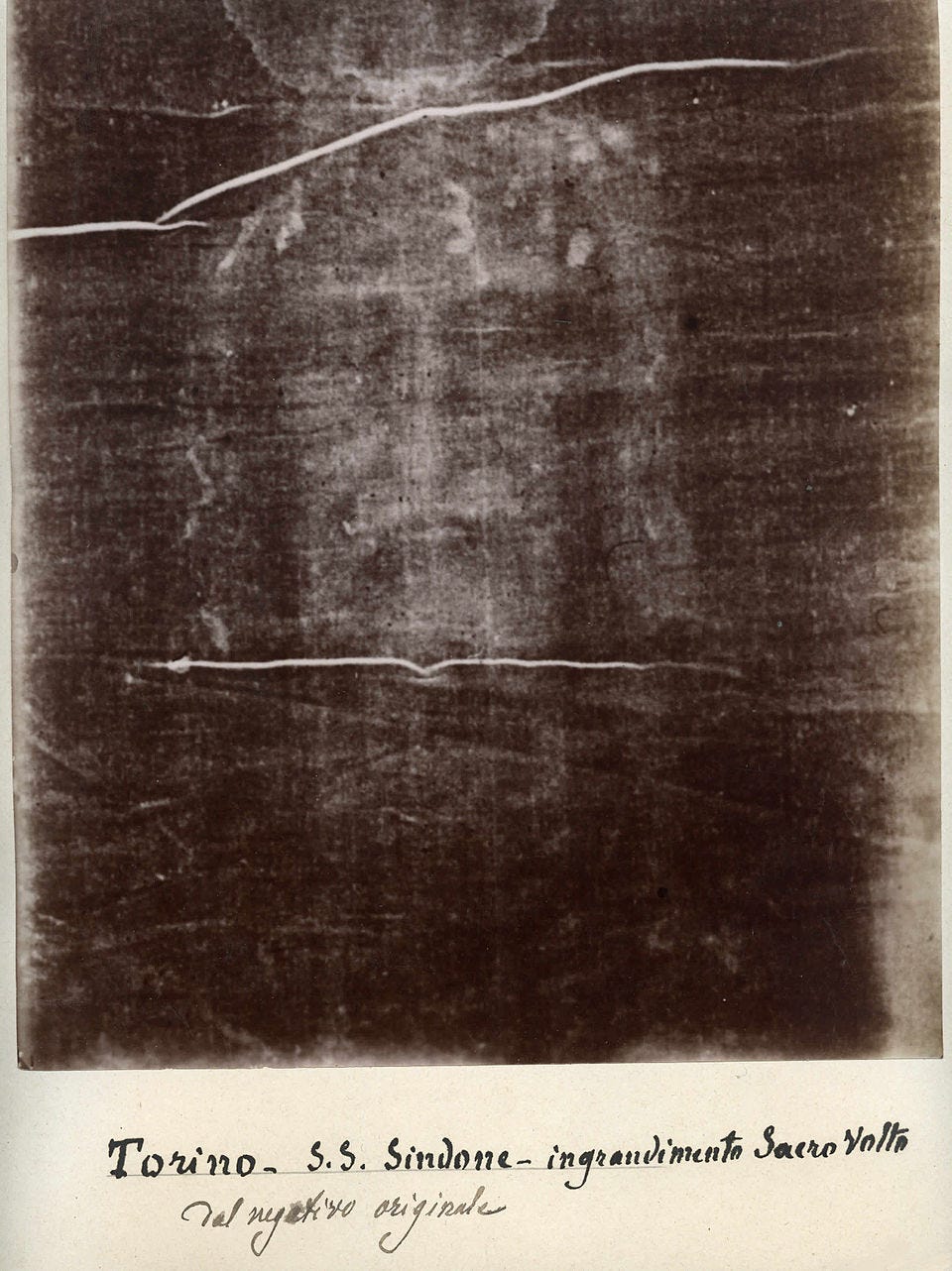
The Shroud of Turin: A Mystery Across Ages
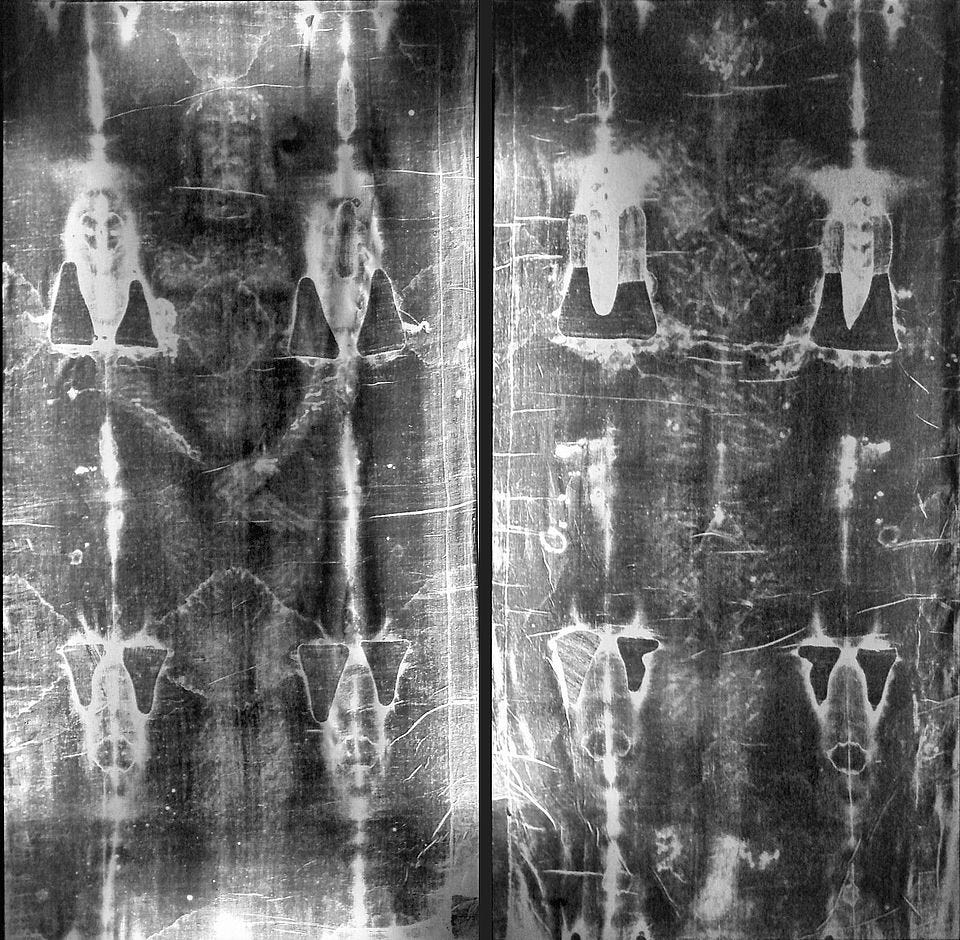
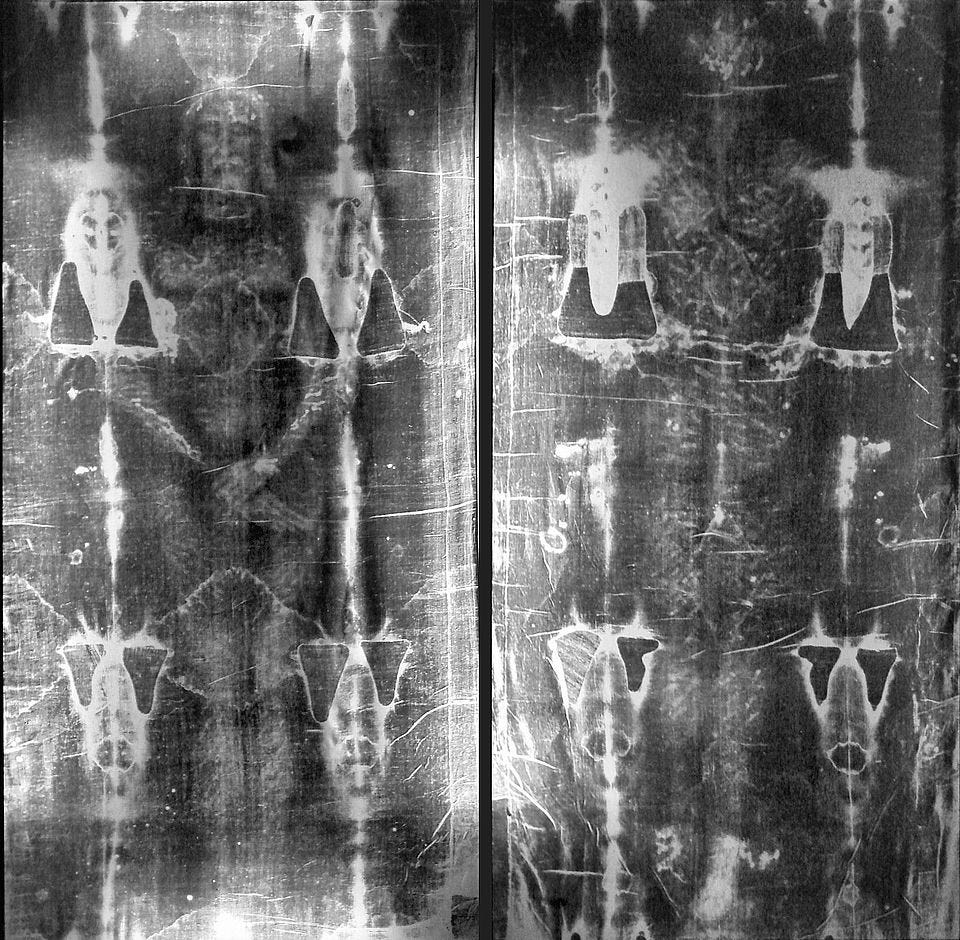
The Shroud of Turin remains one of Christianity’s most studied and debated relics. This linen cloth, measuring approximately 14 feet long and 3.5 feet wide, bears the faint image of a crucified man—front and back—with wounds consistent with Gospel accounts of Christ’s Passion: scourging marks across the entire body, puncture wounds around the head (crown of thorns), wounds in the wrists and feet (crucifixion), and a lance wound in the side.
Modern scientific examination has revealed extraordinary details:
The image is a photographic negative, discovered only when the first photographs were taken in 1898
The blood stains are real human blood, type AB
The image was not painted—there is no paint, dye, or pigment on the cloth
The three-dimensional information encoded in the image suggests it was formed by some kind of radiation or energy burst
Pollen samples and weave patterns are consistent with 1st-century Jerusalem
While the 1988 carbon dating (which suggested a medieval origin) created controversy, subsequent research has challenged those findings, pointing to contamination, improper sampling, and evidence that the tested portion may have been from a medieval repair patch rather than the original cloth.
The Church has not officially declared the Shroud authentic, maintaining a position of respectful agnosticism while permitting veneration as a devotional object. But millions of faithful, including popes and saints, have contemplated this mysterious image and found in it a profound encounter with the suffering Christ.
Devotion to the Holy Winding Sheet
The proper way to observe this feast is through contemplation of the Passion. The Shroud, whether authentic or not, serves as a perfect meditation aid for entering into the mysteries we will commemorate during Lent and Holy Week.
Recommended practices for today:
Meditate on the Passion: Use the image of the Shroud to guide your meditation through Christ’s suffering—the scourging at the pillar, the crowning with thorns, the carrying of the Cross, the crucifixion, the piercing of His side.
Pray the Sorrowful Mysteries of the Rosary: Each mystery corresponds to wounds visible on the Shroud.
Make Acts of Reparation: For the sins committed during carnival, for blasphemies against Christ’s sacred humanity, for indifference to His Passion.
Fast: Even before Ash Wednesday’s obligatory fast, many faithful fast on Shrove Tuesday in honor of the Holy Winding Sheet.
Visit the Blessed Sacrament: Christ’s body, once wrapped in the Shroud, is now sacramentally present in the Eucharist. Make a Holy Hour contemplating the connection between the Passion and the Mass.
The Feast of the Holy Face of Jesus
The Revelation to Sister Maria Pierina De Micheli
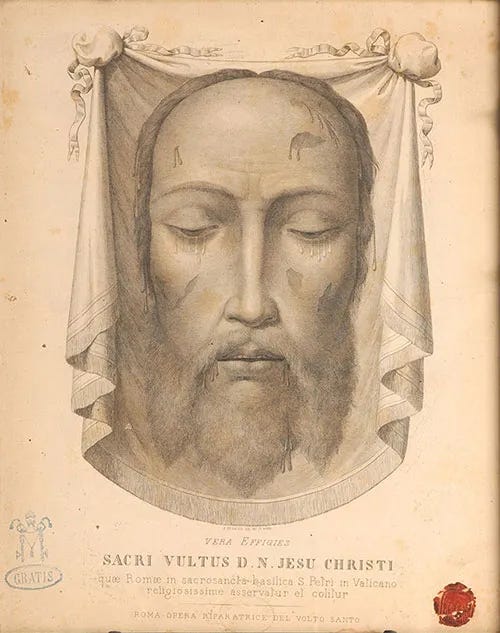
The modern devotion to the Holy Face of Jesus is intimately connected to a Milanese religious sister, Blessed Maria Pierina De Micheli (1890-1945). Beginning in 1936, Sister Maria Pierina received mystical visions in which Our Lord asked for a special devotion to His Holy Face as an act of reparation for blasphemies and outrages committed against Him.
Our Lord told her: “Every time My Face is contemplated, I will pour out My love into hearts and by means of My Holy Face, the salvation of many souls will be obtained.”
Sister Maria Pierina was shown a vision of the Holy Face Medal, which depicted Christ’s face as seen on the Shroud of Turin on one side, and a host with the inscription “Illumina, Domine, vultum tuum super nos” (May Your face shine upon us, O Lord) on the reverse.
Official Approval and the Connection to Shrove Tuesday
In 1940, with the approval of Cardinal Schuster of Milan, Sister Maria Pierina began distributing the Holy Face Medal. The devotion spread rapidly, especially during World War II, when many attributed miraculous protections to the medal.
Pope Pius XII, the same pontiff who would later establish the Feast of the Holy Winding Sheet, approved the Feast of the Holy Face to be celebrated specifically on Shrove Tuesday as an act of reparation for the excesses of carnival.
The connection is profound: while the world mocks Christ through sin and debauchery on Mardi Gras, the faithful are called to contemplate His sacred face, bruised and bloodied for our sins, and to make reparation through prayer, fasting, and works of mercy.
The Shroud and the Holy Face: One Mystery
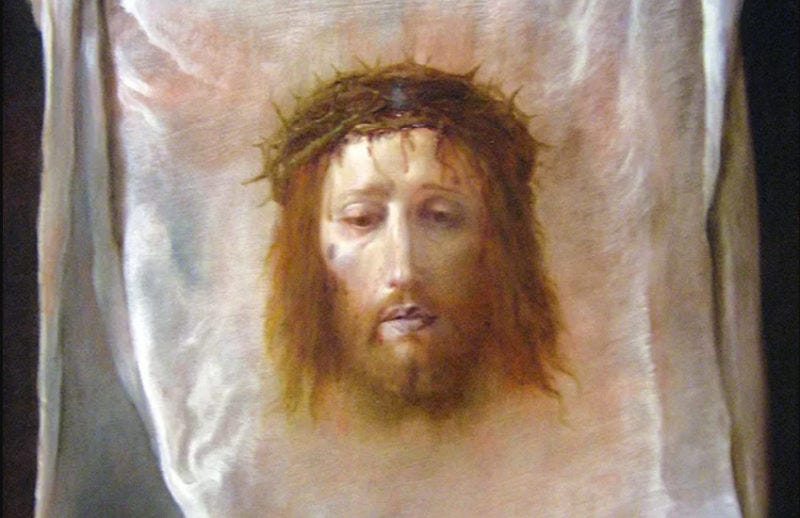
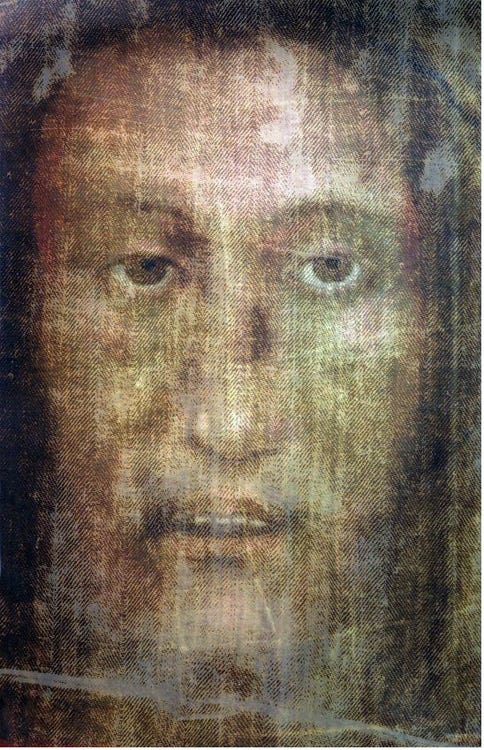
The Holy Face devotion and the Holy Winding Sheet are inseparable. The face on the Shroud of Turin is the same face depicted on the Holy Face Medal. Both devotions invite us to look upon Christ crucified, to see what our sins have done to the God who became man to save us.
As one contemplates the Holy Face, one sees:
The eyes swollen from blows
The nose broken from the guards’ fists
The beard torn out in patches (fulfilling Isaiah 50:6: “I gave my back to those who beat me, my cheeks to those who plucked my beard”)
The face covered in blood from the crown of thorns
The expression of profound suffering mingled with divine peace
This is the face of the Second Person of the Trinity, who “though he was in the form of God, did not count equality with God a thing to be grasped, but emptied himself, taking the form of a servant” (Philippians 2:6-7).
How to Honor the Holy Face Today
The proper observance of the Feast of the Holy Face includes:
1. The Golden Arrow Prayer
Sister Maria Pierina taught a powerful prayer of reparation called the “Golden Arrow,” which pierces Heaven and brings healing:
“May the most holy, most sacred, most adorable, most incomprehensible and unutterable Name of God be always praised, blessed, loved, adored and glorified in Heaven, on earth, and under the earth, by all the creatures of God, and by the Sacred Heart of Our Lord Jesus Christ, in the Most Holy Sacrament of the Altar. Amen.”
This prayer is said in reparation for blasphemies against God’s holy Name.
Pray the Holy Face Chaplet, meditating on Christ’s Passion while asking for the grace to recognize His face in the poor, the suffering, and the despised.
3. Adoration of the Holy Face Image
Obtain an image of the Holy Face (from the Shroud or an icon) and spend time in silent adoration, allowing the Lord to look upon you as you look upon Him.
4. Acts of Reparation
Make specific acts of reparation for:
Blasphemies against Christ’s divinity
Mockeries of His sacred humanity
Indifference to the Eucharist (His true presence)
Sins of the carnival season
Your own sins that contributed to His Passion
5. The Holy Face Novena
Many begin a novena to the Holy Face on Shrove Tuesday, continuing through the first week of Lent, asking for the grace of true conversion and deep sorrow for sin.
The Violence of Lent and the Call to Reparation
The traditional Lenten season is not gentle or therapeutic—it is violent. It is a spiritual combat, a warfare against sin, a mortification of the flesh, and a pursuit of holiness that demands everything from us.
The feasts of the Holy Face and Holy Winding Sheet prepare us for this violence. They show us what sin costs. They reveal the price of our redemption. They strip away our illusions and force us to confront the stark reality: our sins crucified God.
Tomorrow, when the ashes are placed on our foreheads and we hear the words “Remember, man, that thou art dust, and unto dust thou shalt return,” we will be reminded of our mortality. But today, we are reminded of something even more sobering: our culpability. The face we contemplate on the Shroud is the face we bruised. The body wrapped in that winding sheet is the body we crucified.
Reparation vs. Carnival
The world’s Mardi Gras is an act of defiance—a final rebellion before the supposed “restrictions” of Lent. It is characterized by:
Drunkenness and gluttony
Sexual immorality and lewdness
Mockery of sacred things
Violence and disorder
The mentality of “eat, drink, and be merry, for tomorrow we fast”
But this mentality fundamentally misunderstands both feast and fast. True Christian feasting is always moderate, always ordered to God’s glory, always accompanied by gratitude and temperance. And true Christian fasting is not a burden to be escaped but a grace to be embraced.
The Church’s placement of the Holy Face and Holy Winding Sheet feasts on Shrove Tuesday is an act of liturgical genius. It provides a counter-narrative to carnival. It says:
Instead of indulging the flesh, contemplate the Passion. Instead of mocking Christ, make reparation to Him. Instead of pursuing pleasure, pursue penance. Instead of looking at the world, look at the Face of God.
The Example of the Saints
Throughout Church history, saints have had profound devotion to Christ’s Passion, often receiving mystical graces through contemplation of His suffering.
St. Catherine of Siena (1347-1380), one of the great mystics and Doctors of the Church, experienced mystical visions of Christ’s Passion that transformed her life. She received the stigmata (invisible during her lifetime) and was granted extraordinary graces through meditation on Christ’s wounds. Her devotion to the Precious Blood and the Sacred Humanity of Christ became the foundation of her spirituality and her remarkable apostolate.
St. Catherine understood that true conversion requires us to look unflinchingly at what sin does—not in the abstract, but in the concrete reality of Christ’s tortured body. She wrote:
“We must not wish anything other than what God wishes... He showed us what He wished when He sent His only-begotten Son, who came in great suffering and torment.”
Her feast day (April 29) is celebrated with solemnity, but her spirit of reparation and contemplation of the Passion should animate us especially today, as we gaze upon the Holy Face and the Holy Winding Sheet.
Other Saints and the Holy Face
St. Thérèse of Lisieux, the Little Flower, took the religious name “Thérèse of the Child Jesus and of the Holy Face.” She saw no contradiction between devotion to the Infant Jesus and devotion to the suffering Christ—both revealed God’s love and both called for total surrender.
Blessed Columba Marmion, the great Benedictine spiritual writer, taught that contemplation of Christ’s humanity, especially His Passion, is the surest path to union with His divinity.
Pope St. John Paul II, in his 2000 letter to the Congregation of the Sisters Reparatrices of the Holy Face, wrote of the importance of this devotion:
“The contemplation of Christ’s face cannot stop at his earthly image... We are called to behold him above all in the variety of his presence... in his word... in the sacraments, especially the Eucharist... [and] in the poor and suffering.”
The Holy Father emphasized that true devotion to the Holy Face must lead to practical charity—we must see Christ’s face in the faces of the poor, the sick, the imprisoned, and the despised.
Shrovetide Customs Transformed
Traditional Shrovetide customs varied across Catholic Europe, but they generally included:
Shrove Sunday (Quinquagesima): Final Sunday before Lent, with confession and spiritual preparation Collop Monday: Consumption of meat (collops) and eggs Shrove Tuesday (today): Final feasting, use of eggs and butter, confession, carnival (in its original, moderate form)
But as carnival degenerated into excess, the Church responded by intensifying the spiritual character of these days. The establishment of the Holy Face and Holy Winding Sheet feasts on Shrove Tuesday is part of this response—a call to transform the day from worldly celebration into sacred contemplation.
How to observe Shrove Tuesday authentically:
Morning:
Attend Mass if possible (in some places, there is a special Mass of the Holy Face)
Receive Holy Communion as an act of reparation
Spend time in Eucharistic adoration contemplating the Holy Face
Pray the Golden Arrow and other reparation prayers
Afternoon:
Make a thorough confession (final opportunity before Lent)
Pray the Stations of the Cross or Sorrowful Mysteries
Read accounts of Christ’s Passion from the Gospels
Fast or practice moderation, even before Ash Wednesday’s obligatory fast
Evening:
Use up eggs, butter, and rich foods (traditional pancakes or beignets)
Keep the meal moderate and joyful, not excessive
Gather family for prayer, explaining the significance of the feasts
Prepare for Ash Wednesday
Throughout the Day:
Contemplate an image of the Holy Face or Shroud
Offer reparation for sins of carnival
Pray for those enslaved to sin and vice
Ask for the grace of a holy Lent
The Manoppello Image and Other Holy Face Relics
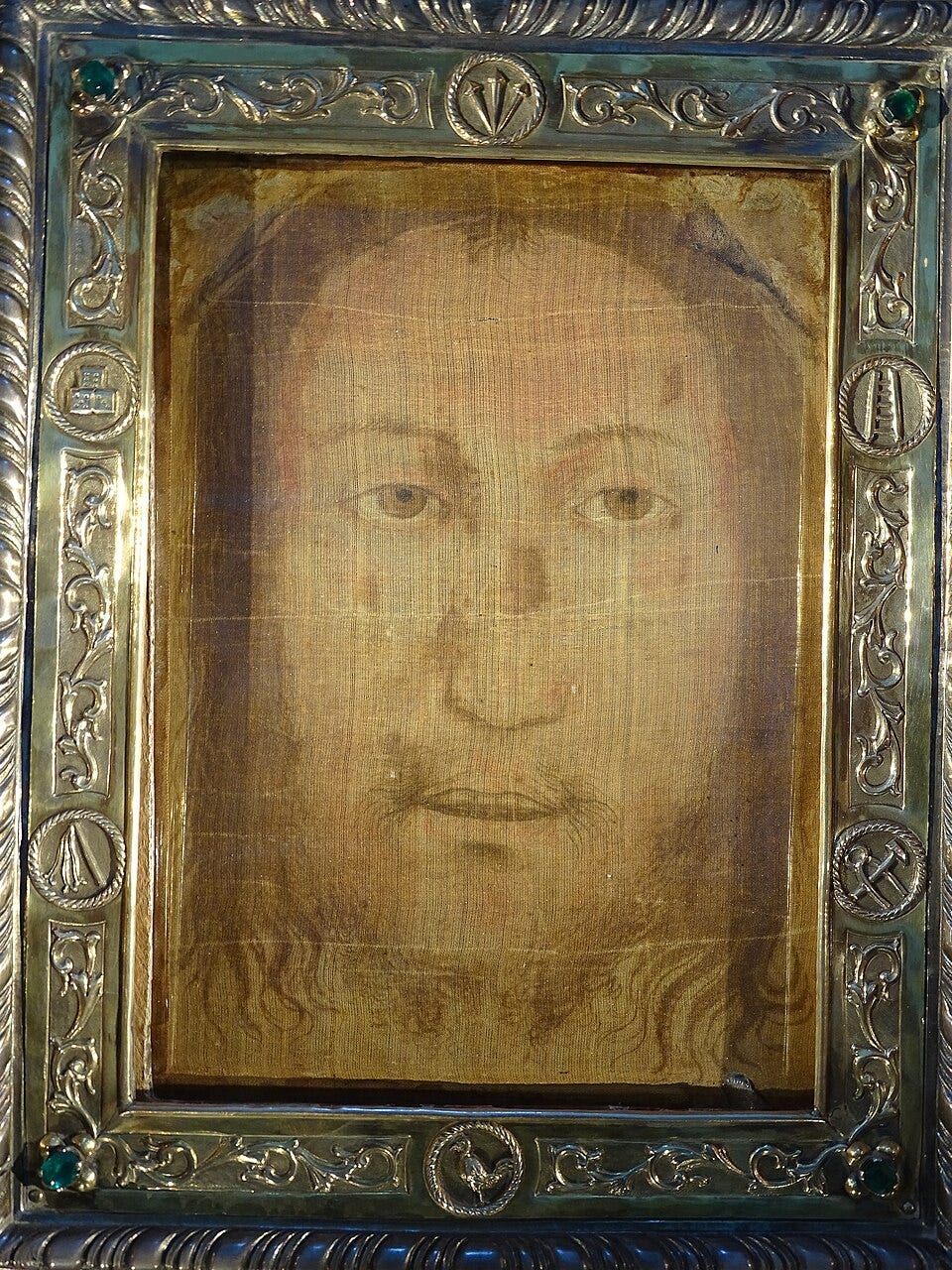
While the Shroud of Turin is the most famous relic bearing Christ’s image, there are other venerated images of the Holy Face, most notably the Veil of Manoppello.
This delicate veil, housed in a shrine in the Italian town of Manoppello (Abruzzo region), bears a faint image of a man’s face that many believe to be the Veil of Veronica—the cloth with which St. Veronica wiped Christ’s face on the Way of the Cross, miraculously imprinted with His image.
The Manoppello veil has remarkable properties:
The image is visible from both sides of the cloth
It appears to be painted with no paint—no pigment can be detected
The features align remarkably with the face on the Shroud of Turin
The eyes appear open (unlike the Shroud, which shows Christ dead)
The expression conveys both suffering and peace
Pope Benedict XVI visited Manoppello in 2006, praying before the veil and encouraging devotion to the Holy Face. While the Church has not officially authenticated this relic either, it remains a powerful focus of devotion and pilgrimage.
Other Holy Face relics and images include:
The Holy Face of Laon (France), an ancient icon
The Holy Face of Lucca (Italy), a wooden crucifix
Various miraculous images in churches throughout the Catholic world
All of these point to the same mystery: God became man, suffered for our sins, and left us images of His sacred humanity to contemplate and venerate.
The Theological Significance: The Incarnation and the Passion
The feasts of the Holy Face and Holy Winding Sheet are profoundly theological. They affirm central Christian doctrines:
The Incarnation: God truly became man. The face on the Shroud is a human face—but it is the face of God. The Second Person of the Trinity assumed human nature, with a real human body that could suffer, bleed, and die.
The Hypostatic Union: Christ is one Person (divine) with two natures (divine and human). The face we contemplate is the face of a man who is also God—hence the reverence and adoration we offer.
The Redemptive Passion: Christ’s suffering was real, physical, and voluntary. He chose to endure the scourging, the thorns, the crucifixion. Every wound visible on the Shroud was inflicted for our sins.
The Resurrection: The mysterious way the image was formed on the Shroud (if authentic) suggests a burst of energy or light at the moment of Resurrection—the same glorified body that walked through walls and ascended into Heaven.
The Real Presence: The body once wrapped in the Shroud is now sacramentally present in every tabernacle. The face we contemplate in the Holy Face image is the same face we receive (veiled) in Holy Communion.
These are not abstract doctrines but lived realities. The Shroud and the Holy Face make them concrete, visual, tangible. They help us move from intellectual assent to personal encounter.
Practical Devotions for Shrove Tuesday
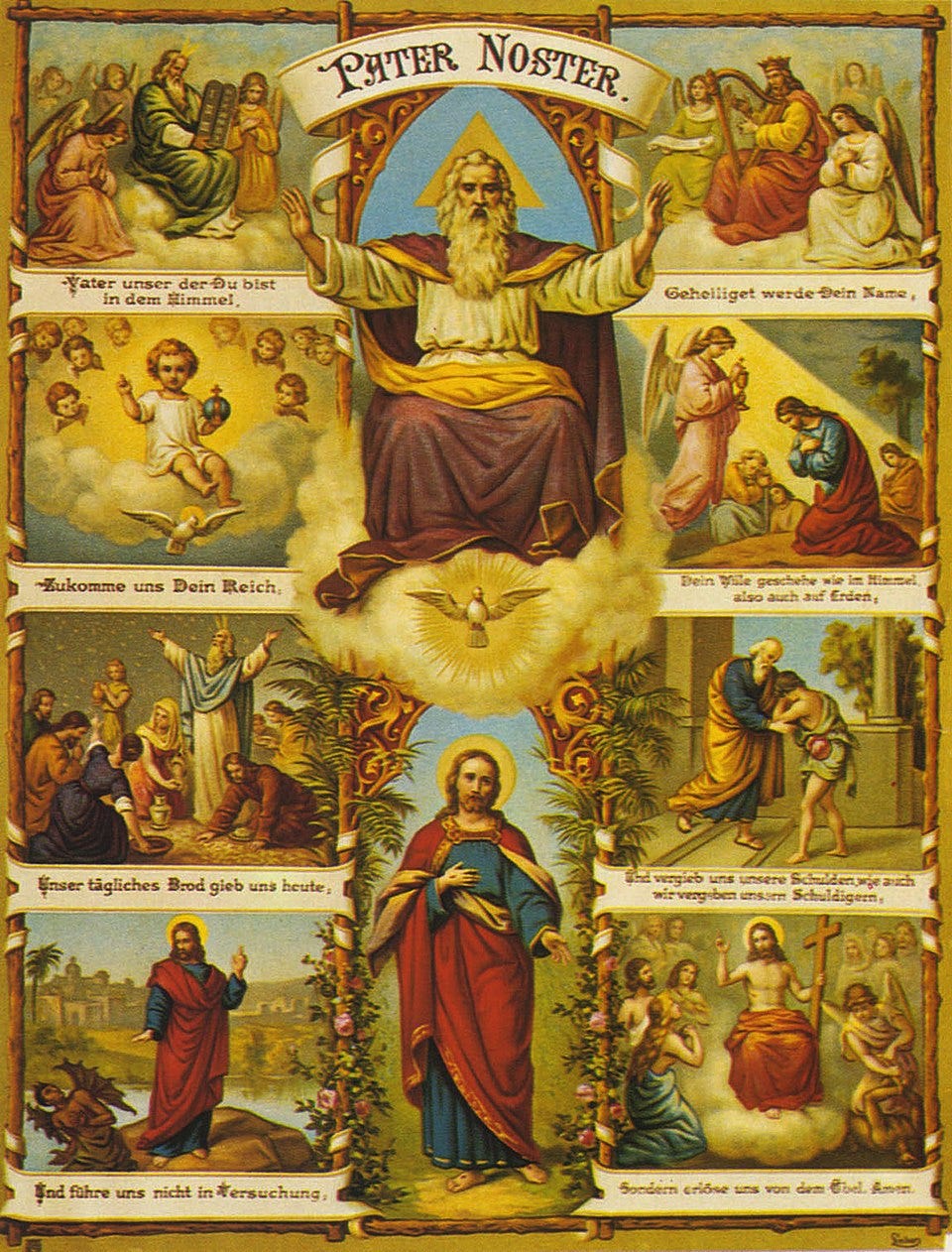
1. The Litany of the Holy Face
Lord, have mercy on us. Christ, have mercy on us. Lord, have mercy on us. Christ, hear us. Christ, graciously hear us.
God the Father of Heaven, have mercy on us. God the Son, Redeemer of the world, have mercy on us. God the Holy Spirit, have mercy on us. Holy Trinity, one God, have mercy on us.
Face of God, image of His eternal beauty, have mercy on us. Face of God, worthy of all honor, have mercy on us. Face of Jesus, face of the Incarnate Word, have mercy on us. Face of Jesus, infinite in majesty, have mercy on us. Face of Jesus, sacred temple of the Divinity, have mercy on us. Face of Jesus, made resplendent by the Holy Spirit, have mercy on us. Face of Jesus, in which dwells the fullness of the Godhead, have mercy on us. Face of Jesus, radiating grace and truth, have mercy on us. Face of Jesus, the delight of the angels, have mercy on us. Face of Jesus, disfigured for our sins, have mercy on us. Face of Jesus, covered with sweat and blood in the Garden, have mercy on us. Face of Jesus, struck by the hand of a servant, have mercy on us. Face of Jesus, covered with spittle, have mercy on us. Face of Jesus, veiled and outraged, have mercy on us. Face of Jesus, bruised and swollen, have mercy on us. Face of Jesus, crowned with thorns, have mercy on us. Face of Jesus, streaming with blood, have mercy on us. Face of Jesus, bathed in tears, have mercy on us. Face of Jesus, sad unto death, have mercy on us. Face of Jesus, bowed down in death, have mercy on us. Face of Jesus, shining with divine light on Tabor, have mercy on us. Face of Jesus, radiant with glory in the Resurrection, have mercy on us. Face of Jesus, seated at the right hand of the Father, have mercy on us. Face of Jesus, which will appear in glory on the last day, have mercy on us.
Lamb of God, who takes away the sins of the world, spare us, O Lord. Lamb of God, who takes away the sins of the world, graciously hear us, O Lord. Lamb of God, who takes away the sins of the world, have mercy on us.
V. Illumina faciem tuam super servos tuos. R. Et salva nos propter misericordiam tuam.
Let us pray: O God, who in the Holy Face of Your Son has given us a mirror of Your love and a pledge of our salvation, grant that we who contemplate Him here below with the eyes of faith may behold Him face to face in glory hereafter. Through the same Christ our Lord. Amen.
2. The Chaplet of the Holy Face
On the crucifix: Apostles’ Creed On the first bead: Our Father On the next three beads: Hail Mary (for faith, hope, and charity) On the medal or next bead: Glory Be
Then, on the five decades:
On the large beads: “Arise, O Lord, and let Your enemies be scattered, and let those who hate You flee before Your Face.”
On the small beads (33 in total, representing Christ’s years on earth): “May the most holy, most sacred, most adorable, most mysterious and unutterable Name of God be always praised, blessed, loved, adored and glorified, in heaven, on earth and under the earth, by all the creatures of God, and by the Sacred Heart of Our Lord Jesus Christ in the most Holy Sacrament of the altar. Amen.” (The Golden Arrow)
Conclude with: “Eternal Father, turn away Your angry gaze from our guilty people whose face has become unsightly in Your eyes. Look instead upon the Face of Your beloved Son, for this is the Face of Him in whom You are well pleased. Now that the adorable Face of Your beloved Son is offered to You as a perfect act of reparation, we ask You to forget our ingratitude and pardon us for all our many crimes. Amen.”
3. Meditation on the Sorrowful Mysteries
Pray the Sorrowful Mysteries of the Rosary today, meditating specifically on Christ’s face during each mystery:
First Mystery (Agony in the Garden): His face covered in sweat like drops of blood Second Mystery (Scourging at the Pillar): His face contorted in pain with each lash Third Mystery (Crowning with Thorns): His face pierced by thorns, streaming with blood Fourth Mystery (Carrying of the Cross): His face meeting the compassionate gaze of His Mother and St. Veronica Fifth Mystery (Crucifixion): His face in agony, then peace, as He commends His spirit to the Father
Looking Forward: From the Face to the Ashes
Tomorrow morning, ashes will be placed on our foreheads in the shape of a cross. These ashes come from the burned palms of last year’s Palm Sunday—a reminder that our hosannas quickly turn to crucifixions, that our enthusiasm fades, that we are fickle and faithless.
But the ashes also connect to today’s feasts. The face that will be marked with ashes tomorrow is the same face that contemplated the Holy Face today. We will hear: “Remember, man, that thou art dust, and unto dust thou shalt return.” But having gazed upon the Shroud and the Holy Face, we know something more: we are dust that God loved enough to die for.
Christ’s face was disfigured so that our faces might be restored. His body was wrapped in a shroud so that we might be clothed in immortality. His death purchased our life.
As we enter Lent tomorrow, let us carry with us the image of the Holy Face. When we are tempted to break our fast, let us remember His hunger in the desert. When we are tempted to complain about our Lenten sacrifices, let us remember His crown of thorns. When we are tempted to give up on prayer, let us remember His night in Gethsemane.
And let us remember, always, that Lent is not an end in itself. The ashes lead to the Alleluia. The Cross leads to the empty tomb. The shroud was left behind in the tomb because Christ rose. The face that was disfigured in the Passion now shines with glory in Heaven.
We fast now so that we may feast eternally. We suffer now so that we may reign forever. We gaze upon the sorrowful face now so that we may behold the glorified face for all eternity.
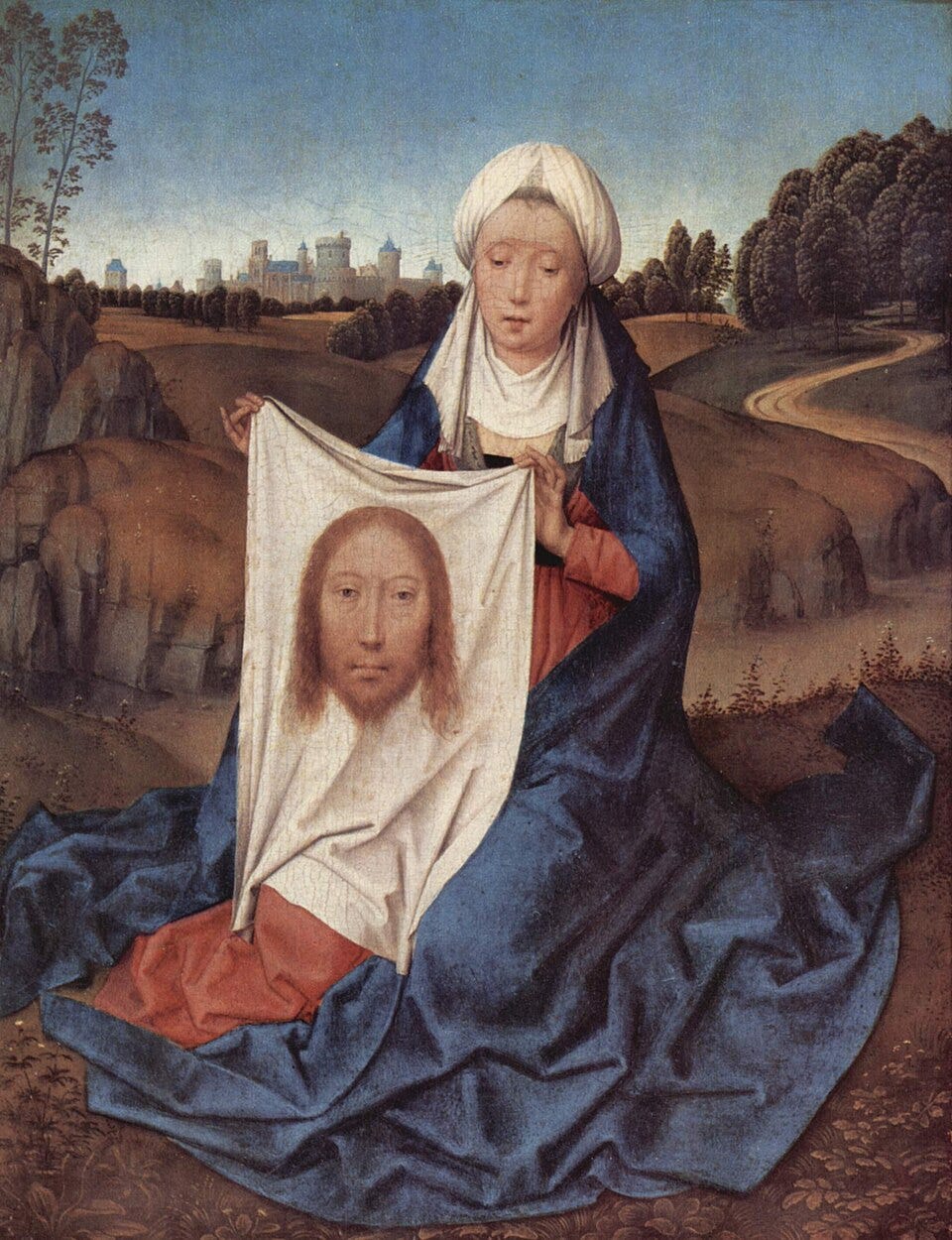
“Turn Not Away Thy Face”
The psalmist prays: “Hide not thy face from me; turn not thy servant away in anger, thou who hast been my help. Cast me not off, neither forsake me, O God of my salvation” (Psalm 27:9).
Today, on this Shrove Tuesday, we contemplate the face that was hidden—covered with spit, veiled in mockery, bowed in death. But we contemplate it precisely so that God will not hide His face from us. We gaze upon His suffering so that He will gaze upon us with mercy.
The Holy Face and the Holy Winding Sheet are gifts of immeasurable value. They are windows into the Passion. They are invitations to reparation. They are calls to conversion.
As the world pursues its final hours of carnival excess, let us choose differently. Let us spend this day in contemplation, in reparation, in preparation. Let us look upon the face of Christ and allow Him to look into our souls. Let us see ourselves as we truly are—sinners in need of mercy. And let us see Him as He truly is—infinite love willing to suffer infinitely for our salvation.
Tomorrow the ashes will fall. But today, we gaze upon the Face.
May the most holy Face of Jesus be known, loved, and adored by all the world, now and forever. Amen.
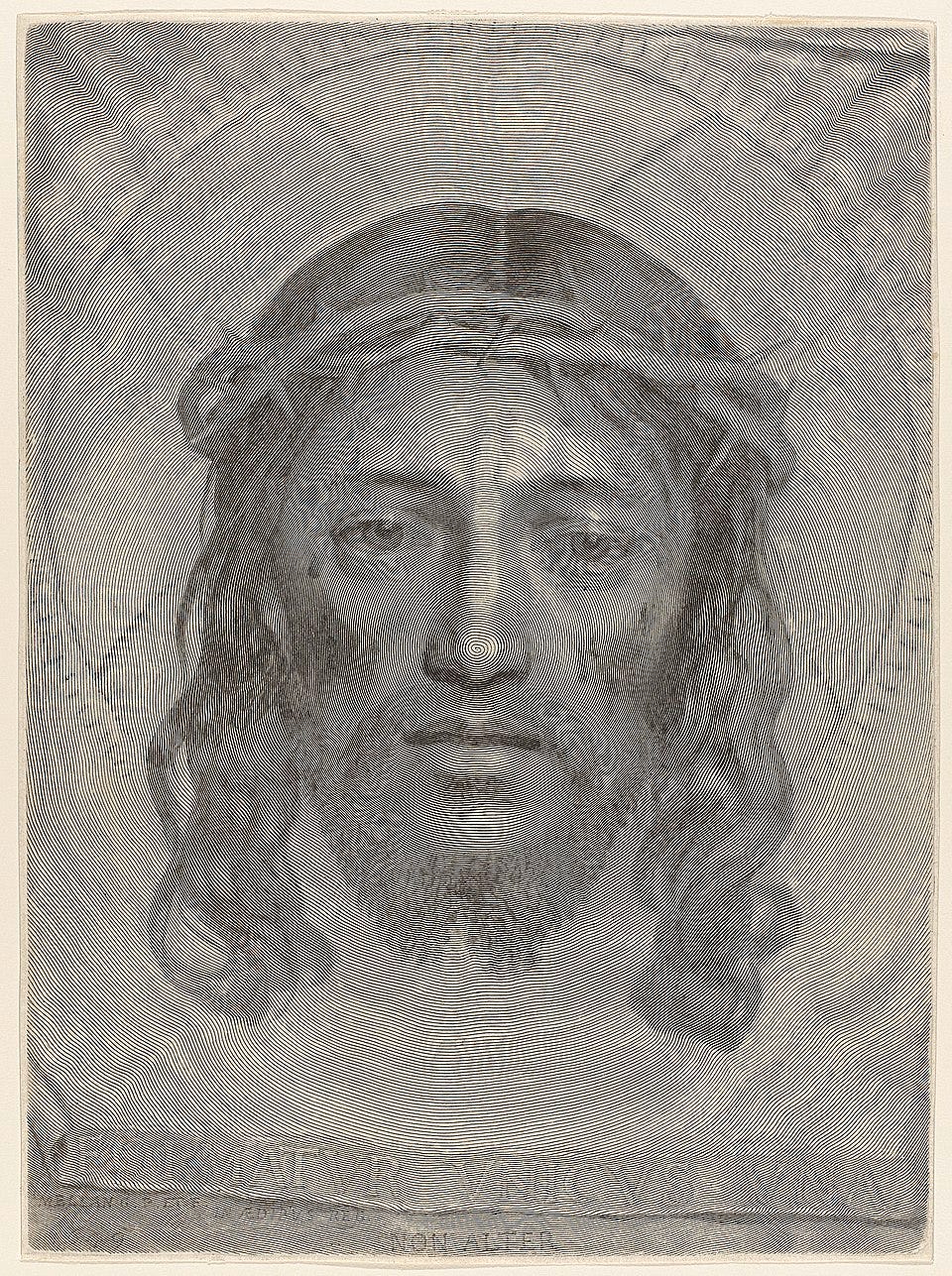
Tomorrow we fast. Today we contemplate. Tomorrow we receive ashes. Today we gaze upon the Face. Tomorrow Lent begins. But today we stand at the threshold, looking back at what our sins have done and looking forward to what His grace will accomplish. May we observe this sacred day with the reverence it deserves, and may the image of the Holy Face and the Holy Shroud accompany us through all the days of Lent, leading us at last to the glory of Easter.
Announcing our 2026 Feast Day Celebrations
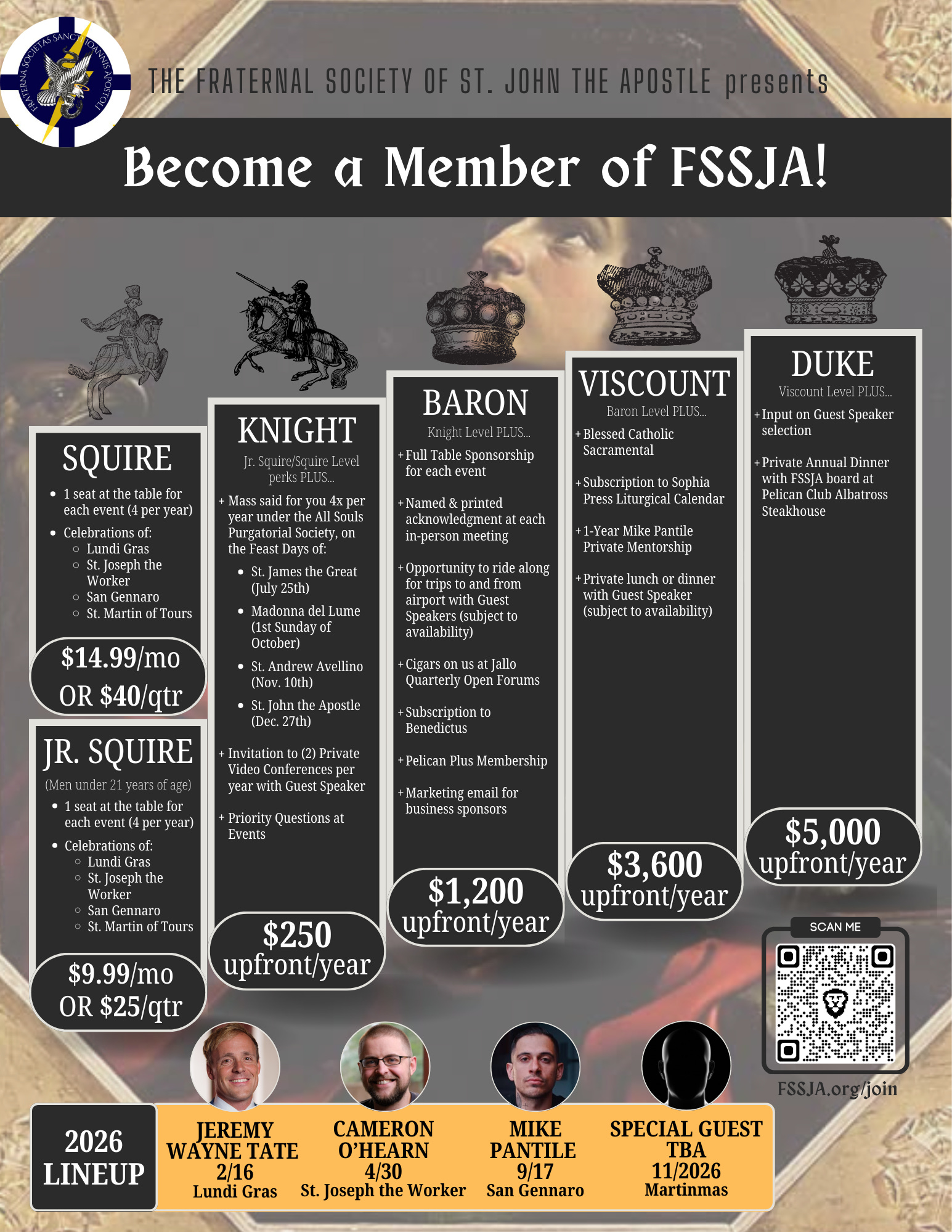
We invite you to renew your membership or become a member today by visiting fssja.org/join.