Spy Wednesday

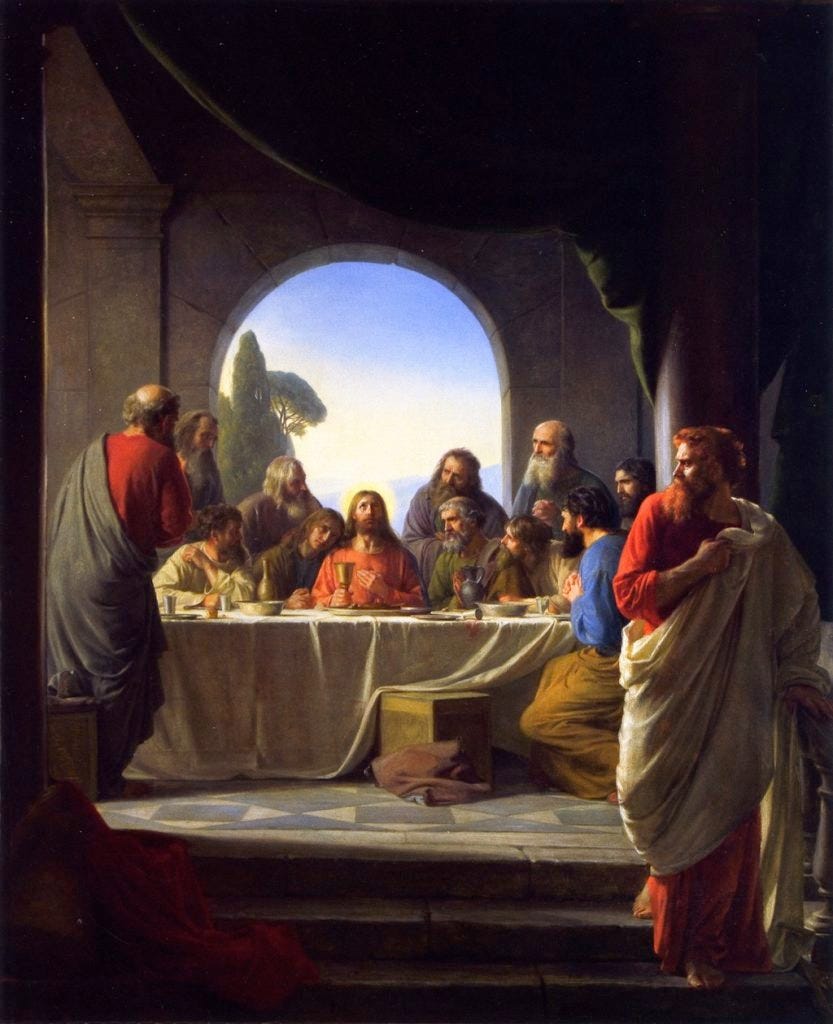
Spy Wednesday: The Night the Traitor Made His Bargain
Wednesday, April 1st, 2026: Holy Wednesday
Two days of Holy Week have passed. The fragrance of the ointment of Bethany still lingers in the memory of the Church; the withered fig tree of Holy Tuesday still stands as a warning to every soul that cultivates the appearance of religion without its substance. And now the liturgy brings us to the third day: a day that the Christian tradition has long called by a name that carries within it the full weight of its horror: Spy Wednesday.
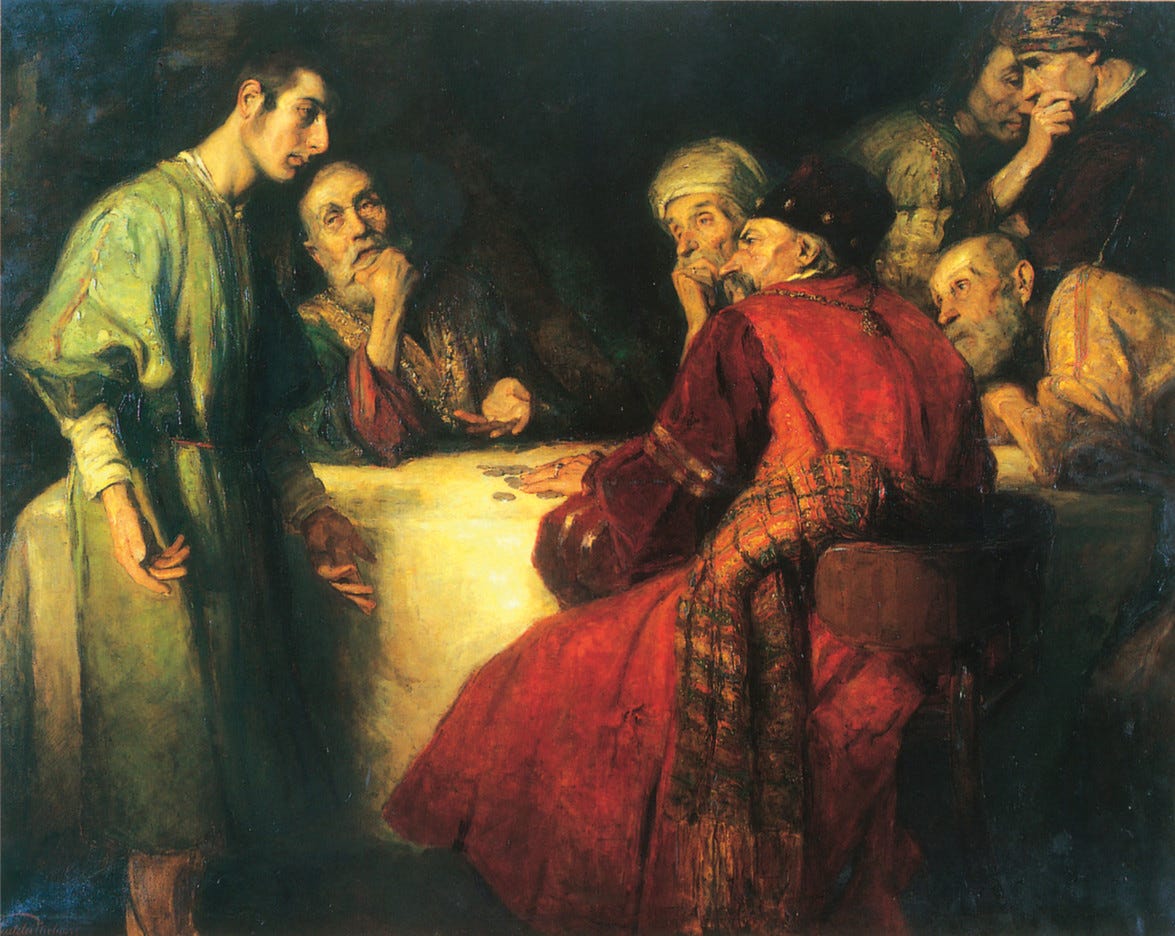
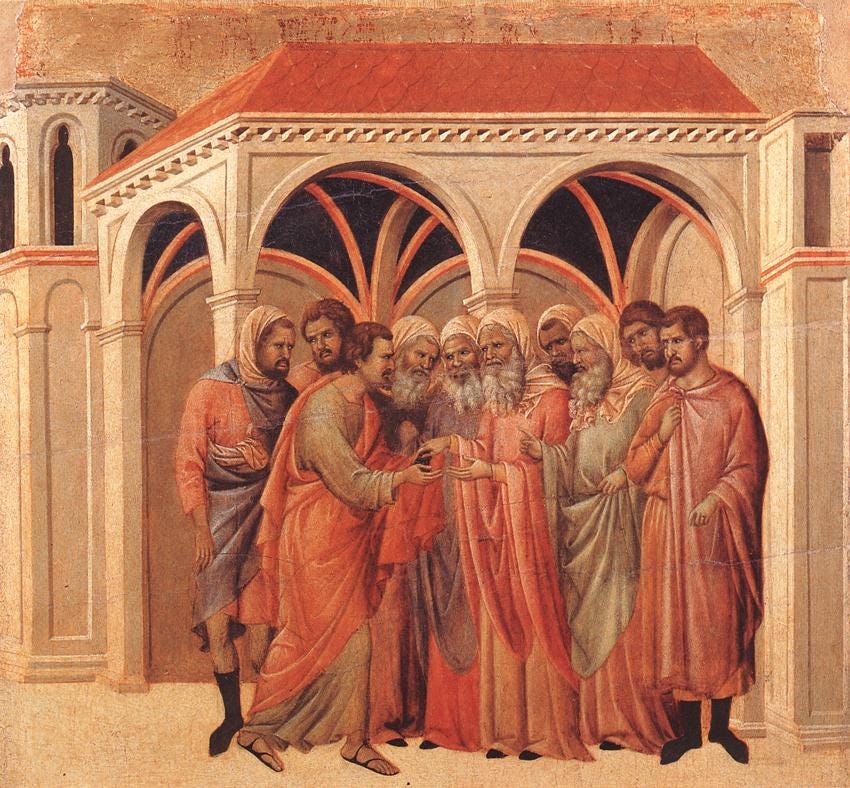
The name is not a modern invention. It is ancient, rooted in the popular piety of the medieval Church, and it points directly to the event that the liturgy commemorates on this day: the moment when Judas Iscariot, one of the Twelve, one of those who had walked with Christ and eaten with Him and heard His words and witnessed His miracles, went secretly to the chief priests and offered to hand Him over for thirty pieces of silver. The word “spy” in its older English usage meant one who acts covertly, one who moves in secret, one who betrays from within; and it is in precisely this sense that Judas becomes, on this Wednesday of Holy Week, the Spy: the one who carries the darkness of betrayal into the innermost circle of the Lord’s company.
The History of Spy Wednesday: Ancient Roots and Liturgical Memory
The observance of Holy Wednesday as a distinct day of commemoration within the Holy Week liturgy is ancient, reaching back to the earliest centuries of the Church’s organized worship. Fish Eaters’ comprehensive account of Spy Wednesday traces the theological and typological roots of this day with remarkable depth, beginning not with the New Testament but with the Old: with the figure of Joseph, the beloved son of Jacob, who was betrayed by his own brothers and sold into slavery in Egypt for twenty pieces of silver. The parallel between Joseph and Christ is one of the most developed typological correspondences in the entire patristic tradition: Joseph, stripped of his coat of many colors, cast into a pit, and sold to foreign merchants, prefigures the Son of God, stripped of His garments, cast into the darkness of death, and handed over to the Gentiles for the price of a slave.
Fish Eaters also draws attention to the figure of Judah, the brother of Joseph who proposed the sale, noting that his very name is the Hebrew original of the Greek “Judas”: the betrayer of the new Joseph bears the name of the betrayer of the old, and the thirty pieces of silver that Judas receives for Christ echo the silver for which Joseph was sold, with the price increased to reflect the infinite distance between the type and the antitype. These typological connections are not merely literary curiosities; they are the Church’s way of reading the whole of sacred history as a single unified narrative, in which every event of the Old Testament finds its fulfillment and its meaning in the life, death, and resurrection of Christ.
The Fish Eaters account also describes the popular traditions that have grown up around Spy Wednesday in various Catholic cultures: the Tenebrae service with its gradual extinguishing of candles; the custom of making noise at the end of the service to symbolize the chaos of the Passion; and the various folk practices that have developed in different countries as ways of marking the solemnity of the day. These traditions, rooted in the popular piety of centuries, are not mere superstition but the expression of a genuine theological instinct: the instinct that the great mysteries of the faith must be not only believed and celebrated in the liturgy but also embodied in the customs and practices of daily life.
The Mass of Spy Wednesday: Liturgical Architecture and Theological Depth
The New Liturgical Movement’s detailed study of the Mass of Spy Wednesday reveals the extraordinary theological coherence of the propers assigned to this day in the Roman Rite. The Mass of Holy Wednesday is one of the most dramatically structured of the entire liturgical year, and its construction reflects centuries of careful theological reflection on the mystery of betrayal and its place within the economy of the Redemption.
The Introit is taken from Philippians 2:10, the great Pauline hymn to the kenosis of Christ: “At the name of Jesus every knee should bow, of those that are in heaven, on earth, and under the earth.” This text, placed at the opening of the Mass on the day that commemorates the betrayal of Christ, creates an immediate and powerful irony: the one who is about to be handed over for thirty pieces of silver is the one before whom every knee in heaven and earth and under the earth must bow. The betrayal of Judas does not diminish the dignity of Christ; it reveals, by contrast, the infinite distance between the love of God and the smallness of human sin.
The Epistle is taken from Isaiah 53, the great Servant Song that the Church has always understood as the most direct prophetic description of the Passion of Christ in the entire Old Testament. The Suffering Servant who is led like a lamb to the slaughter, who opens not his mouth, who is cut off from the land of the living for the transgression of the people: this is the figure that the Church places before the faithful on Spy Wednesday as the theological key to the day’s mystery. The betrayal of Judas is not an accident of history; it is the fulfillment of a divine plan, announced centuries before its occurrence, in which the innocent one freely accepts the fate that the guilty deserve.
The Gospel is the Passion according to Saint Luke, the longest and most theologically complex of the Synoptic Passion narratives, which will be examined in detail below. The New Liturgical Movement’s study notes that the choice of Luke’s Passion for Holy Wednesday, rather than Matthew’s or Mark’s, reflects a deliberate liturgical decision: Luke’s account contains elements that are unique among the Gospels, including the healing of Malchus’s ear, the appearance before Herod, and the words of Christ to the weeping women of Jerusalem, all of which contribute to the particular theological atmosphere of Spy Wednesday.
The 1955 Holy Week Revisions: A Liturgical Controversy
The New Liturgical Movement’s compendium of the 1955 Holy Week revisions provides essential context for understanding the liturgical situation of Spy Wednesday in the modern period. The Holy Week reforms promulgated by Pope Pius XII in 1955 represented the most significant alteration of the Roman Rite’s most ancient and most carefully preserved liturgical texts since the Council of Trent; and the question of their theological and liturgical adequacy has been a matter of serious discussion among those who love the traditional Roman liturgy ever since.
The 1955 reforms affected the Mass of Holy Wednesday in several ways, most notably in the restructuring of the Tenebrae office and the modification of certain rubrics governing the celebration of the Mass during Holy Week. The New Liturgical Movement’s compendium documents these changes with scholarly precision, allowing the reader to compare the pre-1955 and post-1955 forms of the Holy Week liturgy and to assess the theological implications of the alterations. The broader question raised by this compendium is one that goes to the heart of the Church’s understanding of her own liturgical tradition: to what extent is the Roman Rite a living organism that can be legitimately developed and reformed, and to what extent is it a sacred deposit that must be preserved intact as the expression of the Church’s faith across the centuries?
This question is not merely academic. It bears directly on the experience of every Catholic who participates in the Holy Week liturgy, because the form of the liturgy shapes the form of the faith: the way in which the Church prays is the way in which the Church believes, and alterations to the liturgy are never merely ceremonial but always theological. The compendium of the 1955 revisions is therefore not simply a historical document but a contribution to an ongoing theological conversation about the nature and limits of liturgical reform.
The Gospel of Spy Wednesday: The Passion According to Saint Luke
The Catholic Apologetics text of Luke’s Gospel, Chapters 22 and 23, provides the full scriptural text of the Passion narrative as it is proclaimed in the Mass of Holy Wednesday, allowing the faithful to follow the sacred text with the attention and reverence it deserves. Saint Luke’s account of the Passion is unique among the four Gospels in several important respects, and these unique elements give Holy Wednesday its particular theological character.
Luke alone records the healing of Malchus’s ear in the garden, the detail that Christ reached out and healed the servant of the high priest whose ear Peter had cut off in the moment of the arrest. This act of healing in the very moment of betrayal is one of the most theologically concentrated gestures in the entire Gospel narrative: it demonstrates that the love of Christ is not suspended by the violence of His enemies, that His power to heal and to restore is not diminished by the approach of His own suffering, and that the Kingdom He is establishing is one in which the logic of retaliation is replaced by the logic of mercy.
Luke alone records the appearance before Herod, the tetrarch of Galilee, who had long wished to see Jesus and who hoped to witness some miracle. Christ’s silence before Herod is one of the most striking moments in the entire Passion narrative: the one who has spoken the words of eternal life, who has proclaimed the Kingdom of God throughout Galilee and Judea, who has answered every question put to Him by Pharisees and Sadducees and scribes, stands before the king and says nothing. The silence of Christ before Herod is not weakness but judgment: it is the silence of the one who has nothing to say to those who seek only entertainment and spectacle, who have no genuine desire for truth.
Luke alone records the words of Christ to the weeping women of Jerusalem: “Daughters of Jerusalem, weep not over me; but weep for yourselves, and for your children.” These words, spoken on the way to Calvary, are a prophecy of the destruction of Jerusalem that will come in 70 AD; but they are also a permanent challenge to every generation of Christians: the appropriate response to the Passion of Christ is not merely sentimental grief but genuine conversion, the turning of the heart away from sin and toward God that alone can avert the judgment that sin deserves.
The Haydock Commentary: Patristic Wisdom on the Passion of Luke
The Haydock Bible Commentary on Luke Chapter 22 and Luke Chapter 23 bring the full resources of the patristic and scholastic tradition to bear on the Passion narrative of Holy Wednesday with the characteristic comprehensiveness of the great English Catholic biblical commentary. The Haydock Commentary, compiled by Father George Leo Haydock in the early nineteenth century, draws on the Fathers of the Church, the medieval scholastics, and the post-Tridentine commentators to provide a verse-by-verse exposition of the sacred text that is both theologically rigorous and spiritually nourishing.
On the betrayal of Judas, the Haydock Commentary draws on the commentary of Saint Cyril of Alexandria, who reflects on the mystery of divine foreknowledge and human freedom: God knew from eternity that Judas would betray Christ, and yet this foreknowledge did not compel the betrayal; Judas acted freely, and his guilt is therefore complete and unmitigated. The mystery of how divine foreknowledge and human freedom can coexist is one of the deepest questions in Christian theology, and the betrayal of Judas is the point at which this mystery becomes most acute: the most terrible act in human history was both foreknown by God and freely chosen by man.
On the institution of the Eucharist, which Luke narrates in the context of the Last Supper on the night of the betrayal, the Haydock Commentary draws on the commentary of Saint Thomas Aquinas, who reflects on the significance of the timing: Christ institutes the sacrament of His Body and Blood on the very night that He is betrayed, in the very hours that lead to His arrest and death. The Eucharist is thus inseparable from the Passion: it is the sacramental form of the sacrifice that will be offered on Calvary, the means by which the fruits of the cross will be made available to every generation of the faithful until the end of time.
On the trial before Pilate, the Haydock Commentary draws on the commentary of Saint Ambrose of Milan, who reflects on the significance of Pilate’s repeated declarations of Christ’s innocence. Pilate declares three times that he finds no fault in Christ; and yet he hands Him over to be crucified. Ambrose sees in this a figure of the human conscience that knows the truth and yet acts against it: the conscience that recognizes the innocence of Christ and yet yields to the pressure of the crowd, the fear of consequences, the desire to maintain one’s position and avoid conflict. The condemnation of Christ by Pilate is not merely a historical event; it is a permanent possibility for every human soul that allows the fear of human judgment to override the demands of divine truth.

Dom Gueranger: The Theology of Betrayal
Dom Prosper Gueranger’s meditation on Wednesday in Holy Week brings to Spy Wednesday the full resources of his patristic learning and his deep liturgical sensibility. Gueranger meditates on the figure of Judas with a theological seriousness that refuses both the temptation to make him a mere villain and the temptation to excuse him as a victim of circumstances. Judas was one of the Twelve; he had been chosen by Christ Himself; he had heard the Sermon on the Mount and the discourses of the Last Supper; he had witnessed the multiplication of the loaves, the raising of Lazarus, the transfiguration. His betrayal is therefore not the sin of ignorance but the sin of knowledge: the sin of one who knew exactly what he was doing and chose to do it anyway.
Gueranger draws on the patristic tradition’s understanding of the role of avarice in the fall of Judas, noting that Saint John explicitly identifies him as a thief who had been stealing from the common purse throughout the ministry of Christ. The love of money, which Saint Paul calls the root of all evils, had been growing in the heart of Judas throughout the three years of his discipleship; and when the moment of crisis came, when the choice between Christ and silver had to be made, the root that had been growing in secret produced its terrible fruit. Gueranger sees in this a warning to every soul: the sins that destroy us are rarely sudden; they are the product of habits and dispositions that have been cultivated over years, often without our full awareness, until they have grown strong enough to overcome the grace of God that we have been resisting.
Gueranger also meditates on the contrast between Judas and Peter, both of whom betray Christ on this night: Judas with a kiss in the garden, Peter with a denial in the courtyard of the high priest. The difference between them is not in the gravity of their sin but in their response to it: Judas, confronted with the consequences of his betrayal, falls into despair and destroys himself; Peter, confronted with the eyes of Christ after his denial, weeps bitterly and is restored. The tears of Peter are the tears of genuine contrition; the despair of Judas is the final sin that places him beyond the reach of mercy, not because the mercy of God is insufficient but because he refuses to receive it.
Father Goffine’s Instruction: The Catechetical Tradition on Holy Wednesday
Father Leonard Goffine’s instruction on Wednesday in Holy Week, provides the catechetical tradition’s approach to Spy Wednesday with the characteristic directness and practical wisdom of the great Norbertine priest. Goffine’s method is to present the liturgical texts of the day, explain their theological meaning, and draw from them practical lessons for the Christian life; and his instruction on Holy Wednesday is a model of this approach.
Goffine focuses on the Passion of Saint Luke as the central text of the day, drawing from it a series of meditations on the sufferings of Christ that are designed to move the heart as well as instruct the mind. He reflects on the agony in the garden with particular intensity, noting that the sweat of blood that falls from Christ’s brow is a sign of the intensity of His spiritual suffering: the soul of Christ, in its human dimension, contemplates the totality of the sins of the world and freely accepts the burden of them, and the weight of this acceptance is so great that it presses through the pores of His body in drops of blood.
Goffine also reflects on the meaning of the kiss of Judas, understanding it as the supreme perversion of the sign of love: the kiss, which is the gesture of friendship and affection, is used by Judas as the instrument of betrayal. This perversion of love into its opposite is, for Goffine, a figure of the way in which sin always works: it takes the good things that God has created and perverts them, using them as instruments of destruction rather than of life. The kiss of Judas is the kiss of one who has allowed the love of money to destroy the capacity for genuine love; and it is a warning to every soul that allows any created thing to take the place that belongs to God alone.
Bishop Challoner: The English Catholic Tradition on Spy Wednesday
Bishop Richard Challoner’s meditation for Wednesday in Holy Week brings the devotional wisdom of the English Catholic recusant tradition to bear on the mysteries of Spy Wednesday with the characteristic warmth and precision that made Challoner the most beloved spiritual writer of his generation. Challoner meditates on Holy Wednesday as a day of the deepest sorrow: not the sorrow of those who mourn a tragedy that could not have been prevented, but the sorrow of those who recognize in the betrayal of Judas a reflection of their own capacity for sin.
Challoner’s meditation focuses on the meaning of the thirty pieces of silver, understanding them not merely as a historical detail but as a permanent symbol of the way in which the human soul values the things of God. Thirty pieces of silver was the price of a slave in the ancient world: it was the compensation paid to the owner of a slave who had been killed by another man’s ox, the minimum valuation placed on a human life in the legal code of Israel. That the Son of God should be valued at this price by one of His own disciples is, for Challoner, the measure of the depth to which sin can bring the human soul: the soul that has allowed avarice to take root can come to value the infinite at the price of a slave.
Challoner also reflects on the practical implications of this mystery for the Christian life, asking the reader to examine his own life for the ways in which he has valued the things of God at less than their true worth: the Mass attended carelessly, the prayer said without attention, the opportunity for charity neglected, the call to conversion ignored. These are not the dramatic betrayals of a Judas; they are the small, daily betrayals that accumulate over a lifetime and that, if not checked by genuine contrition and conversion, can harden the heart as surely as the avarice of Judas hardened his.
Saint Alphonsus Liguori: The Devotional Depth of Spy Wednesday
The Religious Bookshelf’s meditations for Wednesday in Holy Week, drawn from the writings of Saint Alphonsus Liguori, provide the affective and devotional dimension of the day’s mysteries with the characteristic intensity and tenderness of the great Neapolitan Doctor of the Church. Saint Alphonsus approaches the betrayal of Judas not with the detachment of the historian or the precision of the theologian but with the anguish of the lover: the anguish of one who has understood what it means that the Son of God was handed over to His enemies by one of His own.
Saint Alphonsus meditates on the words of Christ to Judas in the garden: “Friend, wherefore art thou come?” or, in Luke’s account, “Judas, dost thou betray the Son of Man with a kiss?” These words are, for Alphonsus, the most tender and the most terrible words in the entire Gospel: tender because they reveal the love of Christ that persists even in the moment of betrayal, terrible because they reveal the depth of Judas’s hardness of heart. Christ calls Judas “friend” even as he is being betrayed; He does not curse him or condemn him; He simply asks the question that exposes the full horror of what is being done. And Judas, confronted with this love, does not repent; he completes the betrayal.
Alphonsus draws from this scene a meditation on the nature of final impenitence, the sin against the Holy Spirit that consists not in any particular act but in the persistent refusal of the mercy of God. Judas is not condemned because his sin was too great for God to forgive; he is condemned because he refused to seek forgiveness. The mercy of God is infinite; it is capable of forgiving even the betrayal of the Son of God; but it cannot be received by a soul that refuses to open itself to it. The tragedy of Judas is not that God abandoned him but that he abandoned God, and that he did so at the very moment when the love of God was most fully and most visibly present in the world.
The Tenebrae: The Great Office of Holy Wednesday Night
No account of Spy Wednesday would be complete without a consideration of the Tenebrae, the ancient office of Matins and Lauds that is anticipated on the evenings of Wednesday, Thursday, and Friday of Holy Week and that constitutes one of the most dramatic and most theologically rich liturgical experiences of the entire year. The Tenebrae of Holy Wednesday evening, which commemorates the night of the betrayal, is structured around the gradual extinguishing of fifteen candles, one by one, as the psalms and lessons of the office are chanted; until at the end of the office, the church is left in complete darkness, and a loud noise is made to symbolize the chaos of the Passion.
The name Tenebrae is the Latin word for “darkness,” and the darkness that descends on the church at the end of the office is not merely a theatrical effect but a theological statement: it is the darkness of the world without Christ, the darkness of the hour when the Light of the World is handed over to those who seek to extinguish it. The fifteen candles that are extinguished one by one represent the gradual abandonment of Christ by His disciples: as each candle goes out, another companion withdraws, until at last only the single candle that represents Christ Himself remains; and even this is hidden for a moment behind the altar, representing the death of Christ, before being brought back into the light, representing His resurrection.
The Tenebrae is one of the great treasures of the Roman liturgical tradition, a service of extraordinary beauty and theological depth that has the power to move even the most hardened heart. To keep the Tenebrae of Holy Wednesday is to enter into the darkness of the betrayal with the full resources of the Church’s prayer; and to emerge from that darkness into the light of the single remaining candle is to experience, in anticipation, the movement from death to resurrection that is the heart of the Paschal mystery.
What Spy Wednesday Asks of Us
The liturgy of Spy Wednesday does not allow us to remain comfortable spectators of the betrayal of Judas. It places us within the scene; it asks us to recognize in the figure of the traitor not a uniquely wicked man but a man whose sin was the product of the same tendencies that exist in every human heart: the love of money, the hardening of conscience, the gradual withdrawal from the grace of God that leads, step by step, to the final darkness of impenitence.
But the liturgy of Spy Wednesday also places before us the figure of Peter: the man who denied his Lord three times and wept bitterly and was restored. The difference between Judas and Peter is not a difference of sin but a difference of response: one despaired, and the other repented. The question that Spy Wednesday puts to every soul is the question of which response we will choose: not in the abstract, not in some hypothetical future crisis, but here and now, in the concrete circumstances of our daily lives, in the small betrayals and the small denials that accumulate over a lifetime.
Holy Thursday is tomorrow. The Last Supper is one day away. The cross is two days away. Let us use the remaining hours of Spy Wednesday to examine our consciences with the honesty that the Passion demands; to bring to the feet of Christ the thirty pieces of silver of our own small betrayals; and to receive from Him the same look of love that He gave to Peter in the courtyard of the high priest: the look that does not condemn but calls to conversion, the look that does not despair of us even when we have despaired of ourselves.
We invite you to renew your membership or become a member today by visiting fssja.org/join.