The 5th Sunday after Easter...

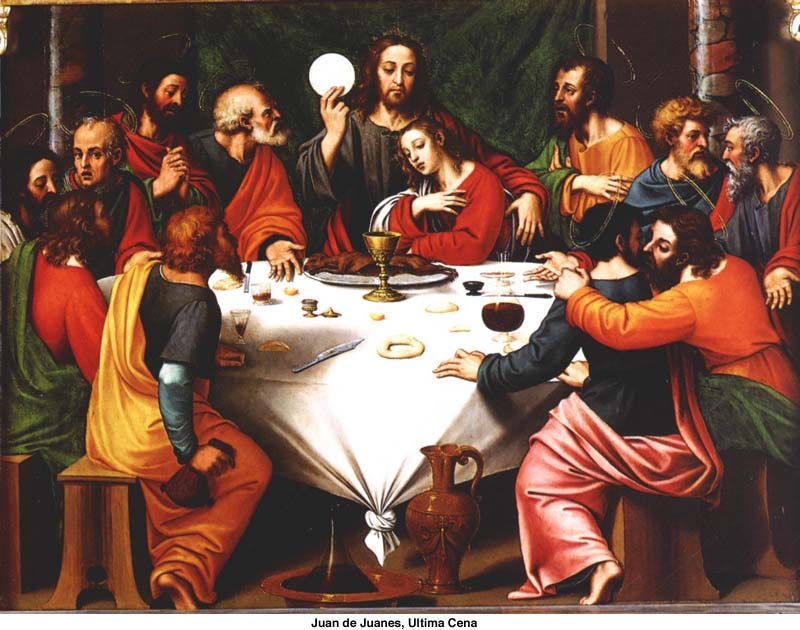
Ask and You Shall Receive: The Fifth Sunday After Easter
As the Paschal season draws toward its glorious summit, the Church arrives at the Fifth Sunday after Easter, a day saturated with the promise of answered prayer and the call to live as doers of the Word. We stand now in the final days before the Ascension, when our Risen Lord will return to the Father, and the liturgy of this Sunday is designed to prepare our hearts for that departure by filling them with an unshakeable confidence in the power of petition made in the name of Jesus Christ. The Introit rings out with the voice of Isaias: “Declare the voice of joy, and let it be heard; declare it even to the ends of the earth: the Lord hath delivered his people.” It is a cry of triumph, yet also a summons to deeper faith, for the Church knows that her children will soon need to walk by faith alone when the visible presence of the Risen Lord is withdrawn from their sight.
The Collect: A Prayer That Teaches Us How to Pray
The prayers of the Mass for this Sunday are among the most theologically precise in the entire liturgical year, and they function as a kind of school for the interior life. As Dom Prosper Gueranger explains, the Collect teaches us that our thoughts and actions, to be made deserving of eternal life, stand in need of grace; the former that we may have the inspiration, the latter that we may have the will to do them. The prayer reads: “O God, from whom all good things proceed, grant to Thy suppliants that, with Thou inspiring them, they may think the things that are right and, with Thou guiding them, they may do the very same.”
There is a beautiful architecture to this oration. A thoughtful reflection published by the New Liturgical Movement draws attention to the parallelism between the Collect and the Postcommunion, noting how the Church first asks God to inspire right thinking and guide right action, and then, after Holy Communion, asks that we may both desire what is right and obtain what we desire. The Postcommunion reads: “Grant to us, O Lord, that having been satiated by the power of this heavenly table, we may both desire the things that are right and obtain the things we desire.” Taken together, these prayers trace the full arc of the spiritual life: from the first stirring of grace in the mind, through the movement of the will, to the consummation of desire in the possession of the good. As St. Augustine wrote, and as the same reflection recalls: “If he wants good things and has them, he is happy; but if he wants bad things, he is unhappy, even if he has them.” The liturgy is training us to want rightly, which is the very foundation of holiness.
Fr. John Zuhlsdorf, in his meditation on the readings for the Fifth Sunday after Easter, notes that this Collect survived even the revisions of the twentieth century, a testament to its enduring power. He quotes Blessed Ildefonso Schuster, who remarked that the prayer reminds us how little credit we can take for the small amount of good that we do: “The first impulse, the determination of our free will, the carrying out of the good resolution, all come from God, and we as reasonable creatures contribute only the bare co-operation of our wills with grace.” This truth, Schuster adds, should fill us with humble submission to God and distrust of ourselves, for humility is the foundation of all our relations with God.
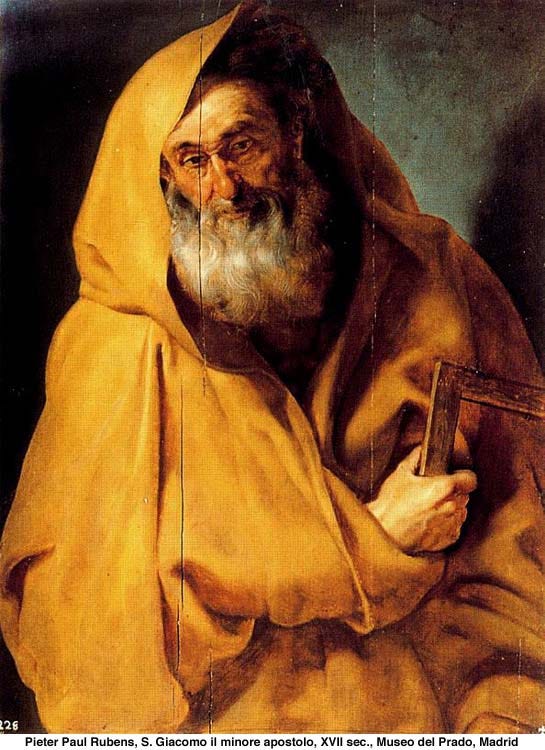
The Epistle: Be Doers of the Word
The Epistle for this Sunday is taken from the first chapter of the Letter of St. James, and it strikes with the force of a hammer upon an anvil. “Be ye doers of the word, and not hearers only, deceiving your own selves.” As the instruction from Fr. Goffine explains, true piety consists not only in knowing and recognizing the word of God, but in living according to its precepts and teachings; in subduing the tongue, the most dangerous and injurious of all our members; in being charitable to the poor and destitute; and in contemning the world, its false principles, foolish customs, and scandalous example.
Gueranger reminds us that St. James the Less is indeed the Apostle of Paschal Time, wherein everything speaks to us of the New Life we should lead with our Risen Lord. He is the apostle of good works, for it is from him that we have received the fundamental maxim of Christianity: that though Faith be the first essential of a Christian, yet without works it is a dead Faith and will not save us. James uses the vivid image of a man who looks at his face in a mirror and then immediately forgets what he looks like. Fr. Zuhlsdorf observes that ancient mirrors were less clear than modern ones, with distortions in the uneven polished surface, but that in our time mirrors show the distortions that are really there. Holding up a mirror to ourselves remains a powerful way of getting across the daily process of self-examination. God sees all our defects; He can neither deceive nor be deceived.
The Apostle then speaks of “religion clean and undefiled before God and the Father,” which is to visit the fatherless and widows in their tribulation and to keep oneself unspotted from this world. As the New Liturgical Movement's commentary emphasizes, the Church uses this time to teach us the proper disposition for prayer and action, reminding us that we are not merely to ask for earthly favors but to seek the wisdom to understand God’s will and the strength to carry it out. This is the “perfect law of liberty” of which James speaks, a law that sets us free precisely by binding us to the truth.
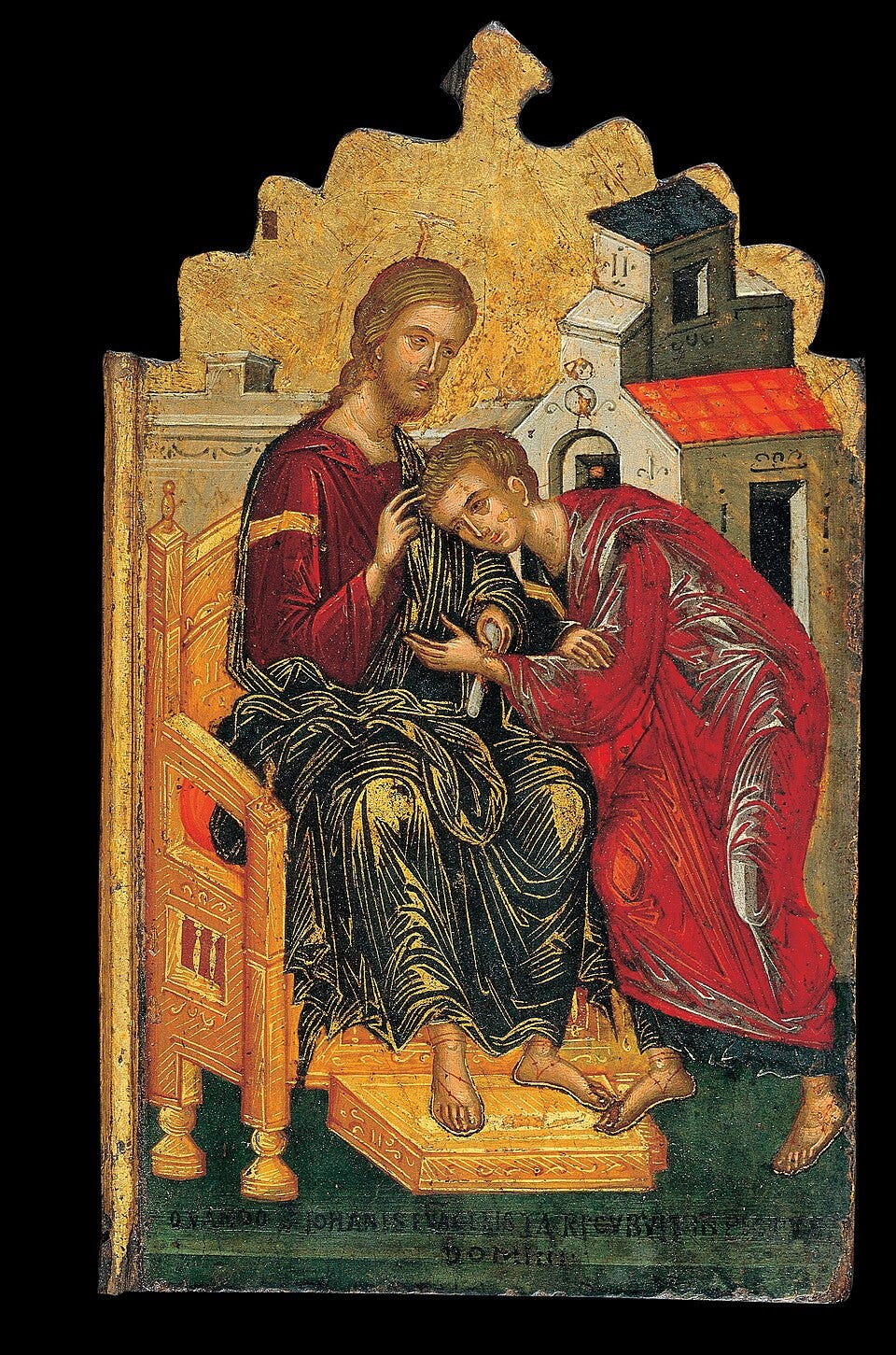
The Gospel: Ask the Father in My Name
The Gospel of the day, taken from the sixteenth chapter of St. John, carries us back to the upper room on the night before Our Lord’s Passion. “Amen, amen, I say to you: if you ask the Father anything in my name, he will give it you. Hitherto you have not asked anything in my name. Ask, and you shall receive, that your joy may be full.” These words are the foundation of Christian confidence in prayer, and they are spoken by Christ at the very moment when He is preparing His Apostles for the sorrow of His departure.
St. John Chrysostom, in his Homily on the Gospel of John, reflects on the meaning of this promise. He notes that when Christ says “Hitherto you have asked nothing in my name,” He is showing that it is good that He should depart, for hitherto they had asked nothing, and then they should receive all things whatsoever they should ask. “My Name shall give you greater boldness,” Chrysostom explains. The Apostles had been relying on the visible presence of Christ; now they must learn to rely on His Name, which carries all the power of His divine Person. Chrysostom also draws out the meaning of Christ’s words, “The Father himself loveth you, because you have loved me,” observing that this was what especially made the Apostles breathe again: the learning that they should be the Father’s friends.
Fr. Goffine’s instruction asks the practical question: why does God sometimes not grant our petitions? The answer is threefold: because we often pray for things that are injurious, and like a good father God denies them to give us something better; because He wishes to prove our patience and perseverance; and because we generally do not pray as we ought. To be pleasing to God, prayer should be made when in a state of grace and with confidence in Christ’s merits, with humility and submission to the will of God, with attention, fervor, sincerity, and perseverance.
The Meditations of St. Alphonsus: The Necessity of Prayer
The morning meditation of St. Alphonsus Liguori takes the Gospel promise as its starting point and develops it into a powerful exhortation on the necessity of mental prayer. “We are poor in all things,” he writes, “but if we pray we are rich in all things; for God has promised to grant the prayer of him who prays to Him.” What greater love, he asks, can one friend show towards another than to say: “Ask of me what you will and I will give it to you”? This is what the Lord says to each one of us. If we are poor in virtue, the fault is our own, because we do not ask Him for the graces of which we stand in need.
St. Alphonsus then invokes the Council of Trent, which teaches in the words of St. Augustine that though man is not able with the aid of the grace ordinarily given to fulfil all the Commandments, still he can, by prayer, obtain the additional helps necessary for their observance. “God does not command impossibilities,” says Augustine, “but by His precepts He admonishes you to do what you can, and to ask what you cannot do; and He assists you that you may be able to do it.” This is one of the most consoling doctrines of the Faith: that God never places before us a duty without also placing before us the means to fulfil it, if only we will ask.
The Saint then asks why God permits us to be assailed by enemies which we are not able to resist. The answer, drawn from Augustine, is striking: the Lord, seeing the great advantages which we derive from the very fact that we have of necessity to pray to Him, permits us to be attacked by enemies more powerful than we are, that we may ask His assistance. St. Bonaventure adds that if a general lose a fortress in consequence of not having sought timely succor from his sovereign, he shall be branded as a traitor. Thus, God regards as a traitor the Christian who, when he finds himself assailed by temptations, neglects to seek the Divine aid. St. Teresa concludes simply: he that does not ask does not receive.
The Rogation Days: A Bridge to the Ascension
This Sunday also serves as the gateway to the Rogation Days, those ancient days of prayer, fasting, and procession that precede the Feast of the Ascension. Fr. Goffine’s instruction provides a rich account of their origin, tracing them to St. Mamertus, Bishop of Vienne in France, who in the year 469, amid terrible earthquakes, failing harvests, and various plagues, assembled the faithful, recommended them to seek refuge in the merciful God, and led them in procession around the fields. Such processions spread over France and gradually throughout the Christian world. They are held in order to obtain from God the averting of universal evils, such as war, famine, and pestilence, and are at the same time a preparation for the Ascension of Christ, who is our most powerful mediator with His Father.
Gueranger notes that the Church now begins to prepare us for the mystery of the Ascension. Christ was born eternally from the Father; He came down to us; but now, in a few days, He is to return to His Father. The Alleluia verse of the Mass makes this explicit: “I came forth from the Father, and I came into the world; I leave the world again, and go to the Father.” There is a holy sadness mingled with the joy of Eastertide, for we know that the visible companionship of the Risen Lord is drawing to a close. Yet the sadness is swallowed up in hope, for He goes to prepare a place for us, and He has promised that if we ask the Father anything in His name, it will be given.
How to Honor the Day
Pray with confidence. Take to heart the promise of the Gospel. Make specific petitions to the Father in the name of Jesus, especially for the needs of the Church, the conversion of sinners, and the grace of perseverance in the life of Easter.
Examine your works. Following the admonition of St. James, reflect honestly on whether you are a doer of the word or merely a hearer. Identify one concrete way you can put your faith into practice this week through a work of mercy or an act of obedience.
Practice mental prayer. Following the counsel of St. Alphonsus, set aside time for meditation. When we practice mental prayer, we discover the wants of the soul, and then we pray for the corresponding graces and obtain them.
Prepare for the Rogation Days. Consider how you might observe the days of prayer and procession that follow this Sunday. Even a simple recitation of the Litany of the Saints in the home, or a walk through your neighborhood while praying for God’s protection over the land and its people, can honor this ancient tradition.
Guard the tongue and the eyes. St. James warns that if any man think himself to be religious and does not bridle his tongue, his religion is vain. Fr. Zuhlsdorf reminds us that bridling the tongue requires regulated movement: words that are well-reasoned, well-timed, and spoken with the proper tone. Let this week be one of greater custody over what we say and what we see.
A Season of Holy Expectation
The Fifth Sunday after Easter is a day poised between the glory of the Resurrection and the triumph of the Ascension. It is a day that teaches us the most essential lesson of the Christian life: that we must ask, and that when we ask in the name of Jesus, the Father hears us. Let us not be like those who look in the mirror and immediately forget what they have seen. Let us instead gaze steadily into the perfect law of liberty, and having seen, let us act. The Risen Lord stands before us, speaking no longer in proverbs but plainly of the Father, and He says to us with all the tenderness of His Sacred Heart: “Ask, and you shall receive, that your joy may be full.”
Vocem jucunditatis annuntiate, et audiatur: Liberavit Dominus populum suum.
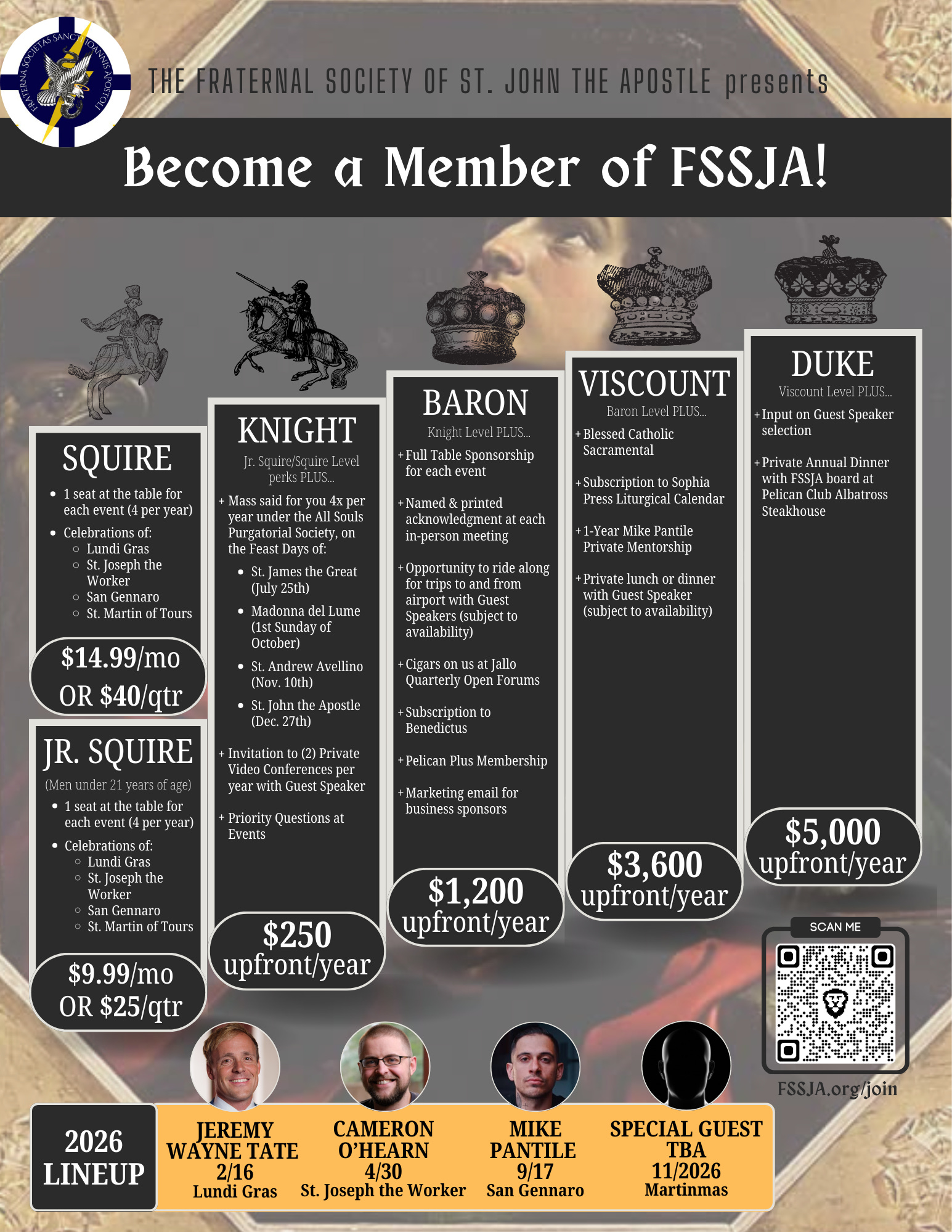
We invite you to renew your membership or become a member today by visiting fssja.org/join.